Kirjojen hintavertailu – 12 859 819 kirjaa ja 27 kauppaa

Kirjailija

Rene Descartes

Kirjat ja teokset yhdessä paikassa: 410 kirjaa, julkaisuja vuosilta 1960–2026, suosituimpiin kuuluu Geometria A Renato Des Cartes. Vertaile teosten hintoja ja tarkista saatavuus suomalaisista kirjakaupoista.

Nimi esiintyy myös muodoissa: René Descartes, René Descartes

410 kirjaa

Kirjojen julkaisuvuodet: 1960–2026.

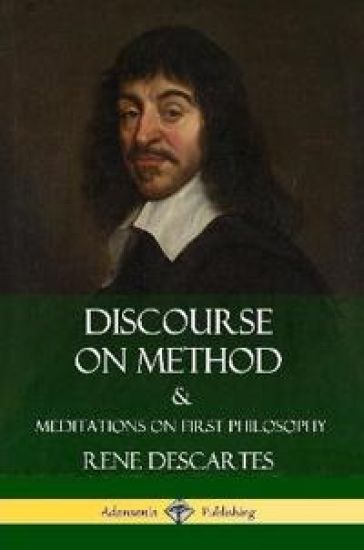
Discourse on Method and Meditations on First Philosophy

Discourse on Method and Meditations on First Philosophy

Rene Descartes

Lulu.com
2018
pokkari

Halvin toimitettuna 19,90 €

Several of Descarte's most ground-breaking essays and philosophic treatises are contained in this quality edition. Written by Ren Descartes in the 17th century and counted among the first great philosophic works of Enlightenment era, these papers contain the philosopher's thoughts on physical objects, presence and being. Descartes describes a series of vivid dreams which, for their realism, leave him in doubt as to whether he does indeed possess a body or whether it is merely an illusion. Descartes reflects upon the nature of dreams, and wonders whether their strangeness is not a consequence of God playing a trick with his mind. Discounting God as the culprit, Descartes instead places responsibility of the illusion of reality at the feet of a 'malignant demon'. The translations present in this edition were composed by the Scottish poet and scholar of philosophy John Vietch, whose academic career at The University of St. Andrews in Fife provided a firm grounding in the philosophic disciplines.
Abhandlung über die Methode, richtig zu denken und Wahrheit in den Wissenschaften zu suchen
Der Discours de la m thode, mit vollem Titel Discours de la m thode pour bien conduire sa raison et chercher la verit dans les sciences ist ein philosophisches und autobiographisches Werk des franz sischen Philosophen Ren Descartes. Es erschien erstmals 1637 anonym in Leiden in franz sischer Sprache und war daher auch philosophischen Laien zug nglich. 1656 folgte eine lateinische Fassung, die in Amsterdam herausgegeben wurde. Aus dem IV. Teil des Discours de la m thode stammt das ber hmte Zitat "Je pense, donc je suis" (dt. "Ich denke, also bin ich"). Der Discours selbst besteht aus sechs Teilen, deren Einteilung Descartes in seinem Vorwort vorschl gt: Betrachtungen ber die Wissenschaften Hauptregeln der Methode Einige moralische Regeln Fundamente der Metaphysik Naturphilosophische Fragen Gr nde, die den Autor zum Schreiben bewogen haben
Principles of Philosophy

Principles of Philosophy

Rene Descartes

SMK Books
2018
sidottu
During his lifetime, Rene Descartes was known throughout Europe as a leading contemporary scientist. He developed one of the most plausible versions of the new mechanistic, mathematical accounts of the world and used it to provide thorough explanations in the fields of optics, cosmology, physics, physiology, and biology. Within only a few decades of his death, Descartes' scientific system was all but forgotten, eclipsed by the far superior mechanistic, mathematical science proposed by Sir Isaac Newton. Yet, despite the quick downfall of his scientific system, Descartes remains one of the most widely read thinkers of any age. It is not his science that makes up his legacy, but rather the philosophy that he developed to serve as its foundation.
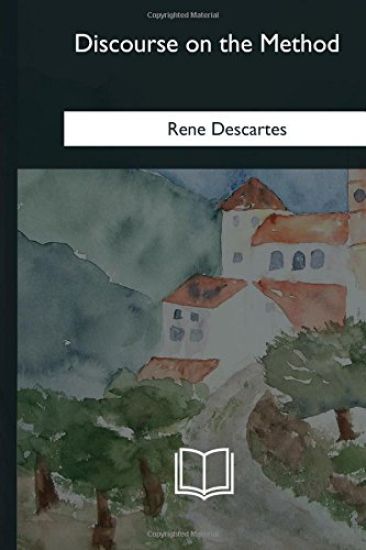
Discourse on the Method: of Rightly Conducting One's Reason and of Seeking Truth

Discourse on the Method: of Rightly Conducting One's Reason and of Seeking Truth

Rene Descartes

Createspace Independent Publishing Platform
2018
nidottu
If this Discourse appear too long to be read at once, it may be divided into six Parts: and, in the first, will be found various considerations touching the Sciences; in the second, the principal rules of the Method which the Author has discovered, in the third, certain of the rules of Morals which he has deduced from this Method; in the fourth, the reasonings by which he establishes the existence of God and of the Human Soul, which are the foundations of his Metaphysic; in the fifth, the order of the Physical questions which he has investigated, and, in particular, the explication of the motion of the heart and of some other difficulties pertaining to Medicine, as also the difference between the soul of man and that of the brutes; and, in the last, what the Author believes to be required in order to greater advancement in the investigation of Nature than has yet been made, with the reasons that have induced him to write.
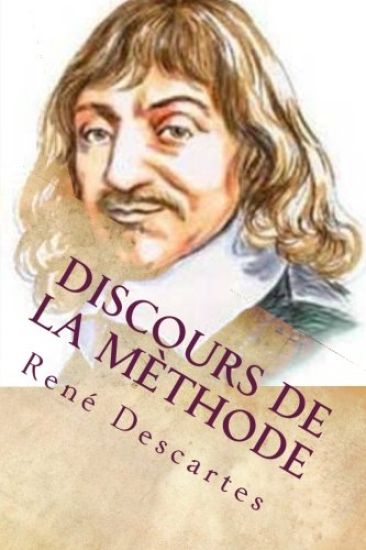
Discours de la mèthode

Discours de la mèthode

René Descartes

Createspace Independent Publishing Platform
2018
nidottu
Ren Descartes (31 mars 1596 - 11 f vrier 1650) tait un philosophe, math maticien, scientifique et crivain fran ais tr s influent. Surnomm le fondateur de la philosophie moderne, et le p re des math matiques modernes, une grande partie de la philosophie occidentale ult rieure est une r action ses crits, qui ont t tudi s de pr s depuis son temps jusqu' nos jours.
A Discourse on Method

A Discourse on Method

Rene Descartes

Alpha Edition
2017
pokkari
The Discourse on the Method is one of the most influential works in the history of modern philosophy, and important to the development of natural sciences. In this work, Descartes tackles the problem of skepticism, which had previously been studied by Sextus Empiricus, Al-Ghazali and Michel de Montaigne. Descartes modified it to account for a truth he found to be incontrovertible. Descartes started his line of reasoning by doubting everything, so as to assess the world from a fresh perspective, clear of any preconceived notions.
Selections from the Principles of Philosophy
Principles of Philosophy is a book by RenE Descartes. In essence it is a synthesis of the Discourse on Method and Meditations on First Philosophy It was written in Latin, published in 1644 and dedicated to Elisabeth of Bohemia, with whom Descartes had a long-standing friendship. A French version (Les Principes de la Philosophie) followed in 1647. It set forth the principles of nature--the Laws of Physics--as Descartes viewed them. Most notably, it set forth the principle that in the absence of external forces, an object's motion will be uniform and in a straight line. Newton borrowed this principle from Descartes and included it in his own Principia; to this day, it is still generally referred to as Newton's First Law of Motion. The book was primarily intended to replace the Aristotelian curriculum then used in French and British Universities. The work provides a systematic statement of his metaphysics and natural philosophy, and represents the first truly comprehensive, mechanistic account of the universe.
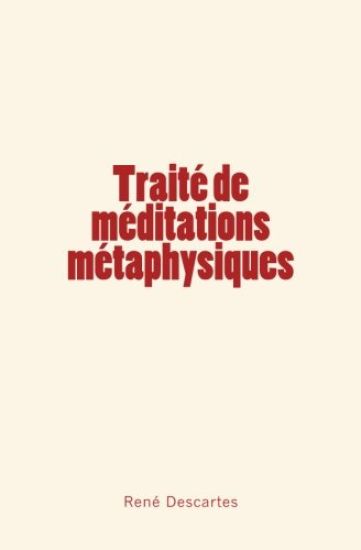
Traité de méditations métaphysiques
Ce trait de Descartes s'adresse ceux qui voudront, m diter s rieusement, et qui pourront d tacher leur esprit du commerce des sens, et le d livrer enti rement de toutes sortes de pr jug s. Dans ces M ditations, j'exposerai avant tout les m mes pens es par lesquelles je me persuade tre parvenu une certaine et vidente connaissance de la v rit , afin de voir si, par les m mes raisons qui m'ont persuad , je pourrai aussi en persuader d'autres. Dans la premi re m ditation, je mets en avant les raisons pour lesquelles nous pouvons douter g n ralement de toutes choses, et particuli rement des choses mat rielles, au moins tant que nous n'aurons point d'autres fondements dans les sciences, que ceux que nous avons eus jusqu' pr sent. Dans la seconde m ditation, l'esprit, qui, usant de sa propre libert , suppose que toutes les choses ne sont point, de l'existence desquelles il a le moindre doute, reconna t qu'il est absolument impossible que cependant il n'existe pas lui-m me. Ce qui est aussi d'une tr s grande utilit , d'autant que par ce moyen il fait ais ment distinction des choses qui lui appartiennent, c'est- - dire la nature intellectuelle, et de celles qui appartiennent au corps. Dans la troisi me M ditation, j'ai expliqu le principal argument dont je me sers pour prouver l'existence de Dieu. Dans la quatri me, il est prouv que les choses que nous concevons fort clairement et fort distinctement sont toutes vraies; et ensemble est expliqu en quoi consiste la raison de l'erreur ou fausset ce qui doit n cessairement tre su, tant pour confirmer les v rit s pr c dentes, que pour mieux entendre celles qui suivent. Dans la cinqui me, outre que la nature corporelle prise en g n ral y est expliqu e, l'existence de Dieu y est encore d montr e par de nouvelles raisons, dans lesquelles toutefois il se peut rencontrer quelques difficult s, mais qui seront r solues dans les r ponses aux objections qui m'ont t faites; et aussi on y d couvre de quelle sorte il est v ritable, que la certitude m me des d monstrations g om triques d pend de la connaissance d'un Dieu. Enfin, dans la sixi me, je distingue l'action de l'entendement d'avec celle de l'imagination; les marques de cette distinction y sont d crites. J'y montre que l' me de l'homme est r ellement distincte du corps, et toutefois qu'elle lui est si troitement conjointe et unie, qu'elle ne compose que comme une m me chose avec lui. J'y apporte toutes les raisons desquelles on peut conclure l'existence des choses mat rielles: non que je les juge fort utiles pour prouver ce qu'elles prouvent, savoir, qu'il y a un monde, que les hommes ont des corps, et autres choses semblables, qui n'ont jamais t mises en doute par aucun homme de bon sens; mais parce qu'en les consid rant de pr s, l'on vient conna tre qu'elles ne sont pas si fermes ni si videntes, que celles qui nous conduisent la connaissance de Dieu et de notre me; en sorte que celles- ci sont les plus certaines et les plus videntes qui puissent tomber en la connaissance de l'esprit humain.

Betrachtungen über die Grundlagen der Philosophie

Betrachtungen über die Grundlagen der Philosophie

Ludwig Fischer; Rene Descartes

Hansebooks
2017
pokkari
Betrachtungen ber die Grundlagen der Philosophie ist ein unver nderter, hochwertiger Nachdruck der Originalausgabe. Hansebooks ist Herausgeber von Literatur zu unterschiedlichen Themengebieten wie Forschung und Wissenschaft, Reisen und Expeditionen, Kochen und Ern hrung, Medizin und weiteren Genres. Der Schwerpunkt des Verlages liegt auf dem Erhalt historischer Literatur. Viele Werke historischer Schriftsteller und Wissenschaftler sind heute nur noch als Antiquit ten erh ltlich. Hansebooks verlegt diese B cher neu und tr gt damit zum Erhalt selten gewordener Literatur und historischem Wissen auch f r die Zukunft bei.
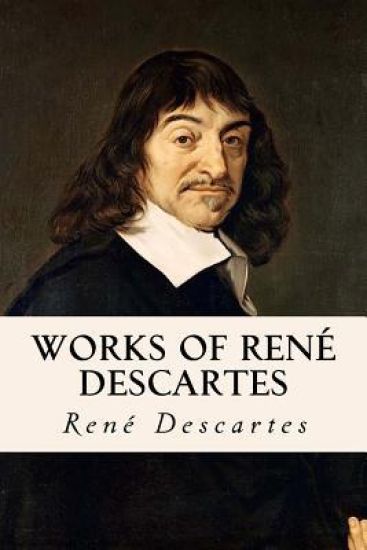
Works of René Descartes

Works of René Descartes

Rene Descartes

Createspace Independent Publishing Platform
2017
nidottu
Works of Ren Descartes is a collection of works by the famed writer, philosopher, mathematician, and scientist. Dubbed the father of modern western philosophy, much of subsequent Western philosophy is a response to his writings, which are studied closely to this day. A native of the Kingdom of France, he spent about 20 years (1629-49) of his life in the Dutch Republic after serving for a while in the Dutch States Army of Maurice of Nassau, Prince of Orange and the Stadtholder of the United Provinces. He is generally considered one of the most notable intellectual representatives of the Dutch Golden Age. The collection includes: Rules for the Direction of the Mind (1628) Discourse on the Method (1637) Meditations on First Philosophy (1641) Principles of Philosophy (1644) Odin's Library Classics is dedicated to bringing the world the best of humankind's literature from throughout the ages. Carefully selected, each work is unabridged from classic works of fiction, nonfiction, poetry, or drama.
Meditations on First Philosophy

Meditations on First Philosophy

Rene Descartes

Createspace Independent Publishing Platform
2017
nidottu
First published in 1641, Meditations on First Philosophy is a philosophical treatise by Ren Descartes, in which are demonstrated the existence of God and the distinction between the human soul and the body. Ren Descartes (1596 - 1650) was a French philosopher, mathematician, scientist and writer of the Age of Reason. He has been called the "Father of Modern Philosophy," and much of subsequent Western philosophy can be seen as a response to his writings. He is responsible for one of the best-known quotations in philosophy: "Cogito, ergo sum" ("I think, therefore I am"). He was a pioneer and major figure in 17th Century Continental Rationalism (often known as Cartesianism) later advocated by Baruch Spinoza and Gottfried Leibniz, and opposed by the British Empiricist school of thought of Hobbes, Locke, Berkeley and Hume. He represents a major break with the Aristotelianism and Scholasticism of the Medieval period.