Kirjojen hintavertailu – 12 903 725 kirjaa ja 27 kauppaa
Kirjailija
Rudolf Steiner
Kirjat ja teokset yhdessä paikassa: 1 477 kirjaa, julkaisuja vuosilta 1910–2026, suosituimpiin kuuluu The Cosmic New Year: A Course of Lectures by Rudolf Steiner. Vertaile teosten hintoja ja tarkista saatavuus suomalaisista kirjakaupoista.
At the end of his life, Rudolf Steiner took up the task that was his special destiny: to bring to the West a knowledge of reincarnation and karma. To do this, he gave over eighty lectures in 1924 in which he explicitly and concretely revealed the destinies of various individuals from one life to the next in order to show how the general laws of karma operate in individual cases. He also revealed many details of the karmic streams of the members of the Anthroposophical Society. These volumes constitute an immeasurable contribution to the understanding of reincarnation and karma, and the tasks of the Anthroposophical Society in connection with the Archangel Michael. This new edition also includes Steiner's last address along with; the karmic groups of souls connected to Aristotelianism and Platonism, the karma of the anthroposophical movement, as well as the individual incarnations of Ernst Haeckel, Vladimir Solovioff and others.
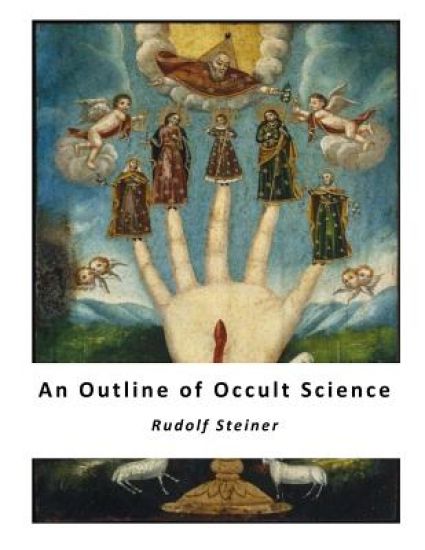
'Occult Classics'An Outline of Occult ScienceByRudolf Steiner, Ph. D. Authorized Translation from the Fourth EditionIn placing a book such as this in the hands of the public, the writer must calmly anticipate every kind of criticism regarding his work which is likely to arise in the present day. A reader, for instance, whose opinions are based upon the results of scientific research, after noting certain statements made here touching these things, may pronounce the following judgment: "It is astounding that such statements should be possible in our time. The most elementary conceptions of natural science are distorted in such a manner as to denote positively inconceivable ignorance of even the rudiments of science. The author uses such terms, for instance, as 'heat' in a way that would lead one to infer that he had let the entire wave of modern thought on the subject of physics sweep past him unperceived. Any one familiar with the mere elements of this science would show him that not even the merest dilettante could have made these statements, and they can only be dismissed as the outcome of rank ignorance." One who undertakes to represent certain results of scientific spiritual research of the kind recorded in this book, must above all things be prepared to find that this kind of investigation is at the present time almost universally regarded as impossible. For things are related in the following pages about which those who are today esteemed exact thinkers, assert that they will probably remain altogether indeterminable by human intelligence. One who knows and can respect the reasons which prompt many a serious person to assert this impossibility, would fain make the attempt again and again to show what misunderstandings are really at the bottom of the belief that it is not given to human knowledge to penetrate into the superphysical worlds.
Atlantis was first mentioned in Plato's works Timaeus and Critias, written in 360 BC. In this work Steiner presents the information available about Atlantis and Lemuria obtained from the Akashic Records, under the influence of the Theosofical Publishing Society.
8 lectures in Germany and Switzerland, February 16 - December 3, 1916 (CW 168) The year is 1916. Europe is entering the third year of the most devastatingly brutal war yet known. The high hopes and idealistic expectations for the newly dawned twentieth century have been very quickly met with the murderous visage of modern warfare. (The death toll would eventually reach 35 million souls.) Such is the context and ever-present background to these presentations, informing both their mood and content. Rudolf Steiner gave these eight lectures to the members of the Anthroposophical Society in various European cities throughout 1916, and they are all heartfelt attempts to address--practically--some of the fundamental questions living strongly in his listeners, who must be always be considered, to some degree, as co-creators of the content: Given the fundamental reality of reincarnation, how do the so-called dead remain connected to us? What meaning do these countless sacrificial deaths have? What are the immediate experiences of those who have died? These are a few of the burning questions addressed. The answers given are anything but theoretical. But there is something else here as well. It could be summed up by the title of the lecture that forms the heart of this collection, given in Z rich on October 10, 1916: "How Can Today's Poverty of Soul be Overcome?" The "today" referred to is not only the "today" of the early twentieth century, it is the epoch in which we are living now; and the overcoming of this "poverty of soul," the wholeheartedly human advice for doing so, only becomes more valid, more urgent, by the hour. ∞ ∞ ∞ CONTENTS: Introduction by Christopher Bamford 1. Life between Death and Rebirth2. The Elements of Our Being between Death and Rebirth3. The Death Event and the Time after Death4. How Can Today's Poverty of Soul be Overcome?5. Karmic Effects6. The Great Delusion of Contemporary Culture7. The Connection between the Living and the Dead8. The Relationship of Human Beings to the Spiritual World Appendices: Notebook Entries for the Lecture of February 18, 1916Admission Ticket for the Lecture of December 3, 1916 Index ∞ ∞ ∞ This volume is a translation from German of Die Verbindung zwischen Lebenden und Toten (GA 168).
1. L'evoluzione delle forme di alimentazione 2. Problemi dell'alimentazione e metodi terapeutici 3. Problemi dell'alimentazione osservati alla luce della Scienza dello Spirito 4. Il processo alimentare 5. L'azione dell'alcool sull'uomo 6. L'azione della nicotina. Alimentazione vegetale e cibi animali
Contemporary interest in the meditative schooling of mindfulness is usually associated with Eastern traditions. Rudolf Steiner spoke of the same phenomenon, although he used the terms 'attentiveness' and 'dedication' - or, combining these two, 'pure perception'. This way of mindfulness and reverence is not in conflict with spiritual paths founded on thinking or pure thought. However, as the texts in this anthology indicate, methods based exclusively on thinking cannot be successful if they are not supported by perception, feeling and will. In counterbalance to today's increasing intellectualization, the meditative exercises featured here connect with the perceptive activity of the human being's sensory organs. They could also be understood as exercises for developing empathy, helping to make our relationship with the world around us more conscious and intense. Rudolf Steiner's texts are sensitively edited and arranged by Andreas Neider, whose introduction and notes add further clarity to the theme.
The concepts of 'thinking with the heart' or 'emotional intelligence' are often used today, usually in contrast to intellectual thought. When Rudolf Steiner used the phrase 'heart thinking', however, he meant it in a very specific sense. Drawn primarily from his lectures, the compiled texts in this anthology illuminate his perspective - that heart thinking is intimately related to the spiritual faculty of Inspiration. The heart, he says, can become a new organ of thinking through the practice of exercises that work towards the transformation of feeling, shedding its personal and subjective character. The exercise sequences presented here call for two fundamental gestures. Firstly, renunciation, which extends from an extinguishing of images engendered in meditation, through inner silence, to a conscious suppression of sense perception. The second gesture involves the development of new feelings towards natural phenomena as well as to the reports of spiritual-scientific research. By practising these methods, we can attain a kind of thinking that is in harmony with the true nature and reality of what we seek to know. Rudolf Steiner's texts are collected together by Martina Maria Sam, who contributes a lucid introduction and notes.
What is true happiness? This perennial question preoccupies many experts, including biologists, psychologists, sociologists and theologians, but their findings usually confirm what we already knew: that happiness is one of the most sought-after but elusive commodities. Rudolf Steiner's liberating view of happiness opens up new vistas and perspectives. Happiness, he says, depends on the human spirit, whose continuing evolution draws sustenance from the totality of life's experiences. We develop and learn in equal measure from both good fortune and misfortune, success and disappointment. Steiner urges inner equilibrium, emphasizing the transience of outward happiness. Inward happiness, however, can never be taken from us, depending as it does on, '...whatever we ourselves make of our outward fortunes'. This rich and inspiring booklet gathers all Rudolf Steiner's statements on the theme and features two complete lectures on happiness and spiritual knowledge. It also includes an insightful introductory essay by Daniel Baumgartner.
Rudolf Steiner offered numerous practical methods to enrich and enliven our daily lives. Drawing on these, the texts in this anthology provide a wealth of ideas to strengthen our health through self-education and personal development. The content ranges from tangible and easy-to-practise exercises to relevant observations on human nature. Steiner speaks of memory and forgetting as the basis of education and cultural development, explaining their significance for health and illness. He discusses the influences of the four human temperaments and their relationship to well-being, and the eightfold path in connection with self-education. Finally, he gives specific exercises for inner development to be practised on the various days of the week. The themes of personal resilience and 'salutogenesis' - an approach that focuses on factors that support human health and well-being rather than those that cause disease - are addressed directly by editor Harald Hass in his introductory essay.