

Kirjailija
Rudolf Steiner
Kirjat ja teokset yhdessä paikassa: 1 477 kirjaa, julkaisuja vuosilta 1910–2026, suosituimpiin kuuluu The Cosmic New Year: A Course of Lectures by Rudolf Steiner. Vertaile teosten hintoja ja tarkista saatavuus suomalaisista kirjakaupoista.
1 477 kirjaa
Kirjojen julkaisuvuodet: 1910–2026.


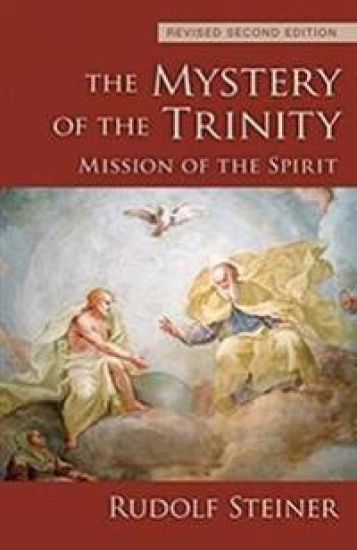
I n these exciting lectures given in 1922, Rudolf Steiner explores the practical consequences of Christian theological spiritual facts as they unfold in human consciousness. Starting with the early Gnostic understanding of the Christ event from within, Steiner shows how medieval theology reached an exoteric view of the spiritual world. It was this view that, coupled with the rise of abstract intellectuality, led to the separation of faith and knowledge that denied humanity access to suprasensory worlds. Using examples from Dionsyius the Areopagite, John Scotus Eriugena, Paracelsus, and Goethe, Steiner then lays the foundations for a path to the suprasensory that would unite faith and knowledge, through the spirit, in a full trinitarian understanding of the human being and the cosmos. Part two consists of lectures given in England that deepen our understanding of the Trinity as this may be known through the spirit. The first lecture deals in a remarkable way with practice and stages of meditation. On the basis of such meditation, Steiner shows how we can begin to understand the cosmic origin of the human being and the meaning of The Mystery of Golgotha for humanity and the cosmos. Above all, he stresses, meditation will allow us to realize the foundations of true knowledge: Ex deo nascimur (We are born of God); In Christo morimur (In Christ we die); Per spiritum sanctum reviscimus (Through the Holy Spirit we are reborn).
Based on knowledge attained through his highly-trained clairvoyance, Rudolf Steiner contends that folk traditions regarding nature spirits are based on spiritual reality. He describes how people possessed a natural spiritual vision in ancient times, enabling them to commune with nature spirits. These entities - which are also referred to as elemental beings - became immortalised as fairies and gnomes in myth, legend and children's stories. Today, says Steiner, the instinctive understanding that humanity once had for these elemental beings should be transformed into clear scientific knowledge. He even asserts that humanity will not be able to reconnect with the spiritual world if it cannot develop a new relationship to the elementals. The nature spirits themselves want to be of great assistance to us, acting as 'emissaries of higher divine spiritual beings'.

Wesenheiten der höheren Hierarchien (die Engel der christlichen Tradition) sind unsichtbare Begleiter des Menschen. Sie wirken im Leben des Einzelnen, in der Entwicklung der Menschheit und des Kosmos. Anthroposophie macht deutlich, wie wichtig ein Verständnis des Engelwirkens für die Fortentwicklung der Menschheit ist.
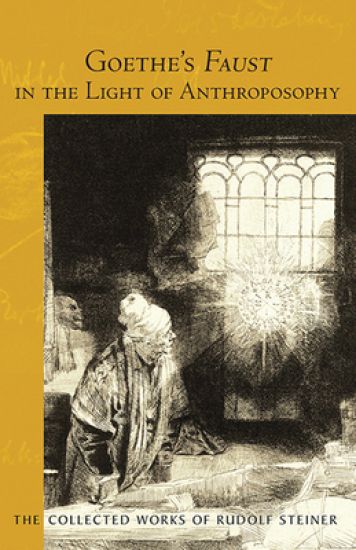
By late 1916, Rudolf Steiner had become an important interpreter of Goethe and frequently discussed Faust probably Goethe s greatest work from the perspective of anthroposophic Spiritual Science. Although Steiner s readings are unconventional and unsystematic, his insights into the text are penetrating and prescient, opening scholarly avenues not discovered or pursued by others until decades later and, in some cases, still await fuller elaboration. Steiner s account is completely unlike those of his contemporaries, including those Goethean scholars he most admired. His approach is not a philological construction of the ideal text, a positivistic account of the biographical genesis of the work or influences on Goethe, an intellectual and historical recasting of the drama as implied philosophical argument, or a view of the tale through the lens of an especially refined sensibility. Steiner s discussions veer into each of these arenas, but, invariably, he steers back to his original course, stressing the least realistic, least historical, and least romantic aspects of Goethe. Steiner contributed to the scholarship on Faust by, above all, opening new aesthetic perspectives; by revealing the centrality of Greek Mystery religion within the archetypal unconscious of Faust; by showing the duality of evil latent within Goethe s text; and by exploring an alchemical transformation of consciousness. In this volume, Steiner anticipates the best of Goethe s Faust by helping us to see the Neoplatonic Faust, the Hermetic Faust, the archetypal Faust in short, the esoteric Faust."

Das Hereinwirken geistiger Wesenheiten in den Menschen
Rudolf Steiner
Steiner Verlag, Dornach
2016
sidottu
Rudolf Steiners bok Teosofi (1904), oversatt og med en innledning av Kaj Skagen, kom i ny, heftet utgave i 2015. - Med utgangspunkt i Goethes skildring av mennesket som borger av tre verdener - den fysiske, sjelelige og åndelige - gir Steiner i dette hovedverket en systematisk fremstilling av antroposofien. Boken beskriver menneskets vesensledd, livet mellom død og ny fødsel, de gjentatte jordeliv og veien til en høyere erkjennelse. Et hovedmotiv i boken er ideen om karma og reinkarnasjon, som forfatteren fremstiller i en tankeklar, logisk form - ikke som en orientalsk overlevering, men som en konsekvens av en moderne naturvitenskapelig erkjennelse og metode. «Denne boken krever en annen lesemåte enn den vanlige i vår tid. I en viss mening må leseren bearbeide hver eneste side og mang en setning. Boken er bevisst skrevet med dette for øyet.» (Rudolf Steiner i forordet) «Teosofi hører til de ytterst sjeldne bøker som et sekel etter førsteutgivelsen ennå finner brede leserkretser utenfor fagmiljøene. Også om nye hundre år vil den bli utgitt og studert. Sin hvileplass under hyllestøvet finner den først når dens potensiale er blitt utnyttet. Først da blir Steiner historie. Det kan bli lenge til.» (Fra Kaj Skagens innledning).

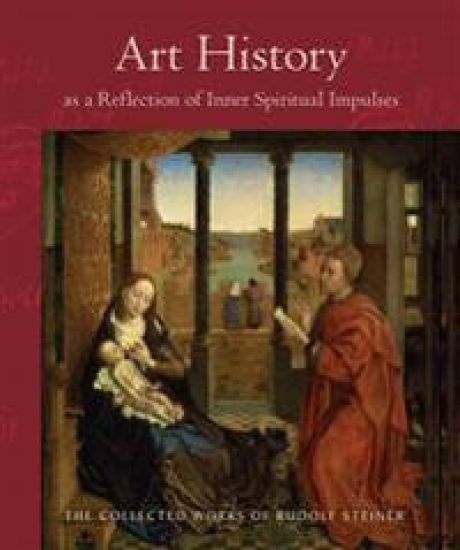
Art History as a Reflection of Inner Spiritual Impulses
Rudolf Steiner
SteinerBooks, Inc
2016
nidottu
Halvin toimitettuna 40,60 €
Rudolf Steiner understood that the history of art is a field in which the evolution of consciousness is symptomatically and transparently revealed. This informal sequence of thirteen lectures was given during the darkest hours of World War I. It was a moment when the negative consequences of what he called the age of the consciousness soul, which began around 1417, were made most terribly apparent. In these lectures he sought to provide an antidote to pessimism. After describing the movement of consciousness from Greece into Rome, coupled with influences from the Orthodox East, he showed how these influences transformed as the Middle Ages became the Renaissance. The process that begins with Cimabue and Giotto develops, deepens, and becomes more conscious in the great Renaissance masters Leonardo, Michelangelo, and Raphael. Then this movement continues with the Northern masters, D rer and Holbein, as well as the German tradition. One entire lecture is devoted to Rembrandt, followed by one on Dutch and Flemish paintings. Themes are woven together to show how past epochs of consciousness and art live again in our consciousness-soul period. Replete with interesting information and more than 600 color and black-and-white images, these lectures are rich and dense with ideas, enabling us to understand both the art of the Renaissance and the transformation of consciousness it announced. These lectures demonstrate (to paraphrase Shelley) that artists truly are the unacknowledged legislators of the age.
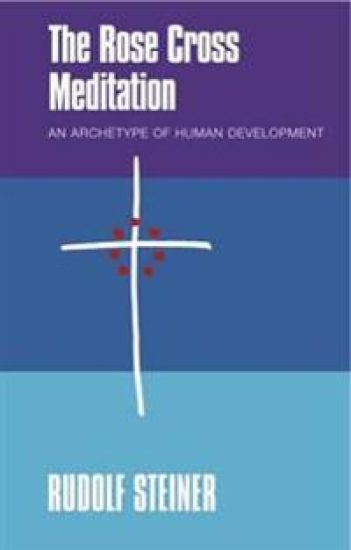
The Rose Cross meditation is central to the western - Rosicrucian - path of personal development as presented by Rudolf Steiner. Steiner repeatedly referred to the meditation as a 'symbol of human development' that illustrates the transformation of the human being's instincts and desires. These work unconsciously in the soul, and in thought, feeling and will. Through personal development, the 'I' - the essential self - can gain mastery over these unconscious forces of the soul. The Rose Cross meditation features the red rose as an image to which the student, via specific means, aspires. To the plant is added the black cross which, pointing to the mystery of death and resurrection, provides a symbol of the higher development of the human I. The metamorphosis of the roses and the cross into the symbol of the Rose Cross is brought about by the student's inner efforts, creating an entirely new image. This becomes the starting point for further steps along the meditative path. The Rose Cross meditation is the only pictorial meditation whose content and structure Steiner described in such detail. In this invaluable book, the editor has drawn together virtually all Rudolf Steiner's statements on the subject, arranging them chronologically within the motif of each chapter. His words are supported by commentary and notes.
Rudolf Steiner (1861-1925), antroposofiens grunnlegger, utviklet en meditativ erkjennelsesvei for vår tid. Denne boken inneholder tre sentrale tekster om meditasjon, fra forskjellige faser av hans virksomhet. Med utgangspunkt i en moderne, vitenskapelig orientert bevissthet utviklet Rudolf Steiner (1861-1925), antroposofiens grunnlegger, en meditativ erkjennelsesvei for vår tid. Denne boken inneholder tre utvalgte tekster om meditasjon, fra forskjellige faser av hans virksomhet: Trinnene i den høyere erkjennelse (1905-08), En vei til selverkjennelse i åtte meditasjoner (1912) og Om sjelelivet (1923). En beskrivelse av Generelle krav enhver må stille seg som vil gjennomgå en okkult utvikling (de såkalte «biøvelsene») er også tatt med, og et kapitel fra boken Terskelen til den åndelige verden (1913), «Om den tillit man kan ha til tenkningen og om den tenkende sjels vesen. Om å meditere». Boken har en innledning av Harald Haakstad og en grundig innføring i temaet av Jørgen Smit, «Antroposofiens meditative erkjennelsesvei», som belyser og aktualiserer Steiners meditasjonsanvisninger.

Grundlinien einer Erkenntnistheorie der Goetheschen Weltanschauung
Rudolf Steiner
TP Verone Publishing
2016
sidottu
Rudolf Steiner was a philosopher, social thinker, architect, and esotericist. He based his epistemology on Johann Wolfgang Goethe's world view, in which 'Thinking ...is no more and no less an organ of perception than the eye or ear. Just as the eye perceives colors and the ear sounds, so thinking perceives ideas.'
Steiner was a philosopher, social thinker, architect, and esotericist. He based his epistemology on Johann Wolfgang Goethe's world view, in which 'Thinking ...is no more and no less an organ of perception than the eye or ear. Just as the eye perceives colours and the ear sounds, so thinking perceives ideas.'

The Electronic Doppelganger
Rudolf Steiner
Rudolf Steiner Press
2016
nidottu
Halvin toimitettuna 22,50 €
'Large temptations will emanate from these machine-animals, produced by people themselves, and it will be the task of a spiritual science that explores the cosmos to ensure all these temptations do not exert any damaging influence on human beings.'In an increasingly digitised world, where both work and play are more and more taking place online and via screens, Rudolf Steiner's dramatic statements from 1917 appear prophetic. Speaking of 'intelligent machines' that would appear in the future, Steiner presents a broad context that illustrates the multitude of challenges human beings will face. If humanity and the Earth are to continue to evolve together with the cosmos, and not be cut off from it entirely, we will need to work consciously and spiritually to create a counterweight to such phenomena. In the lectures gathered here, edited with commentary and notes by Andreas Neider, Rudolf Steiner addresses a topic that he was never to speak of again: the secret of the 'geographical' or the 'ahrimanic' doppelganger. The human nervous system houses an entity that does not belong to its constitution, he states. This is an ahrimanic being which enters the body shortly before birth and leaves at death, providing the basis for all electrical currents that are needed to process and coordinate sense perceptions and react to them. Based on his spiritual research, Rudolf Steiner discusses this doppelganger or 'double' in the wider context of historic occult events relating to 'spirits of darkness'. Specific brotherhoods seek to keep such knowledge to themselves in order to exert power and spread materialism. But this knowledge is critical, says Steiner, if the geographical doppelganger and its challenges are to be understood.
'Our neurosensory system is inwardly configured music, and we experience music as an artistic quality to the degree that a piece of music is in tune with the mystery of our own musical structure.' - Rudolf SteinerWhat is music? Rudolf Steiner regards the essence of music as something spiritual, inaudible to the senses. The world of tones, borne on the vibrations of air, is not the essential element. 'The true nature of music, the spiritual element in music', he says, 'is found between the tones, lies in the intervals as an inaudible quality.'Rudolf Steiner spoke repeatedly about music as something inherent both in the cosmos and the human being. It played an important role in many forms of ritual and worship, and people once perceived a link between music and the world of stars, which was seen as the dwelling place of the gods. Nowadays our view of music is divorced from such religious outlooks, but research repeatedly demonstrates the profound effect it continues to have on us. In this unique anthology of texts, compiled with a commentary and notes by Michael Kurtz, Steiner describes the realm of the spiritually-resonating harmonies of the spheres and our intrinsic connection to this cosmic music. He also explores the phenomenon of musical listening and experience, as well as Goethe's approach to music.