Kirjojen hintavertailu – 12 903 725 kirjaa ja 27 kauppaa

Kirjailija

Rudolf Steiner

Kirjat ja teokset yhdessä paikassa: 1 477 kirjaa, julkaisuja vuosilta 1910–2026, suosituimpiin kuuluu The Cosmic New Year: A Course of Lectures by Rudolf Steiner. Vertaile teosten hintoja ja tarkista saatavuus suomalaisista kirjakaupoista.

1 477 kirjaa

Kirjojen julkaisuvuodet: 1910–2026.

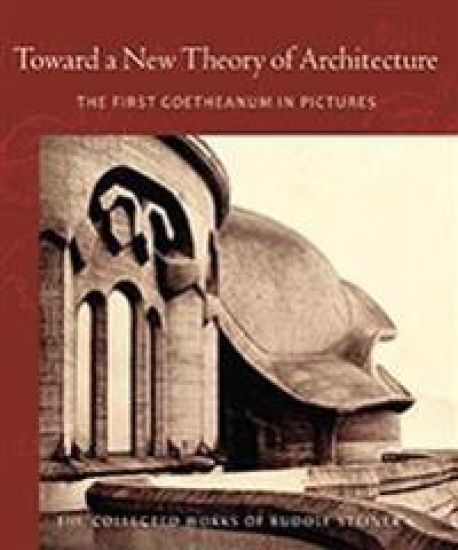
Toward a New Theory of Architecture

Toward a New Theory of Architecture

Rudolf Steiner

SteinerBooks, Inc
2017
pokkari
Rudolf Steiner gave thousands of lectures in his lifetime, usually without notes, and, with very few exceptions, with nothing more than chalk and a blackboard if he chose to accompany his speech with some kind of visual illustration. A notable exception is the presentation that constitutes the main part of this book. Given in June 1921, in Bern just eighteen months before its tragic destruction by fire, this lecture and slide show (consisting of a hundred slides) is both the closest thing we have to a guided tour of the original Goetheanum by its architect and a profound statement of artistic purpose. In addition to the lecture and slide show that comprise the main content of this volume, the introduction by John Kettle serves to place Steiner's artistic contribution to architecture in the context of early twentieth-century Expressionism and Organicism. Frederick Amrine's thorough bibliographic essay highlights the most important secondary literature on Steiner's architecture and provides a sound entry to further exploration and study.
Die Philosophie der Freiheit

Die Philosophie der Freiheit

Rudolf Steiner

Hansebooks
2017
pokkari
Die Philosophie der Freiheit - Grundz ge einer modernen Weltanschauung ist ein unver nderter, hochwertiger Nachdruck der Originalausgabe aus dem Jahr 1894. Hansebooks ist Herausgeber von Literatur zu unterschiedlichen Themengebieten wie Forschung und Wissenschaft, Reisen und Expeditionen, Kochen und Ern hrung, Medizin und weiteren Genres. Der Schwerpunkt des Verlages liegt auf dem Erhalt historischer Literatur. Viele Werke historischer Schriftsteller und Wissenschaftler sind heute nur noch als Antiquit ten erh ltlich. Hansebooks verlegt diese B cher neu und tr gt damit zum Erhalt selten gewordener Literatur und historischem Wissen auch f r die Zukunft bei.
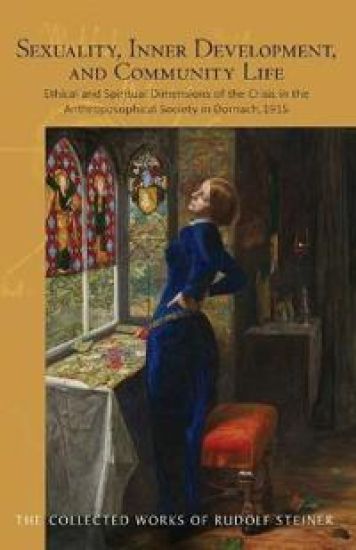
Sexuality, Inner Development, and Community Life
Occasioned by a "scandal" precipitated by Rudolf Steiner's marriage to Marie von Sivers in 1915, the lectures that constitute part one contain Steiner's strongest statements on the issue of human relationships in a spiritual community. Using emphatic language Steiner makes it clear that becoming part of a spiritual community entails responsibilities and, indeed, a new way of being, and that members must become actively interested and engaged in the concerns of the group rather than simply wanting or expecting personal benefit from it. Above all, he asserts that it is essential for members to realize that a spiritual community is a living entity that needs the care and respect of its creators. Because the crisis had been provoked by individuals under the influence of Freudian psychoanalysis, Steiner assesses Freud's work, and psychoanalysis as a whole, illumined by an anthroposophic understanding of the human being. Steiner also speaks on sexuality and modern clairvoyance, relating them to Freudian psychoanalysis, as well as to the seer Emanuel Swedenborg as an example of the difficulties of entering the spiritual world. Then, starting from a historical perspective, Steiner poses a question: How old is love? He goes on to examine our modern idea of love in the context of mysticism. Part two includes documentation of the Dornach crisis, along with two addresses by Rudolf Steiner to the members there, as well as Marie Steiner's address to the Women's Meeting on the particular tasks and challenges of women, both as members of the women's movement of the time and in a spiritual community.
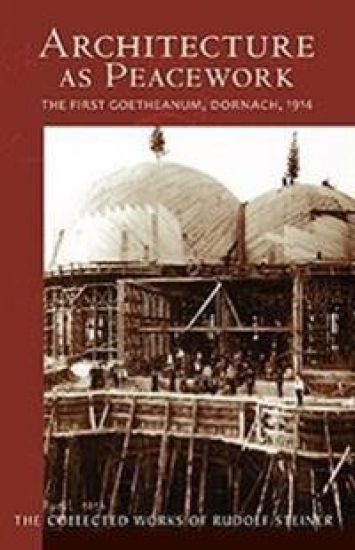
Architecture as Peacework

Architecture as Peacework

Rudolf Steiner

SteinerBooks, Inc
2017
pokkari
At the outbreak of World War I in August 1914, the construction of the singular architectural masterwork that would later be called the Goetheanum (and, later still, the First Goetheanum) was already well under way on a hill just above the village of Dornach in neutral Switzerland. There, a small international community had gathered over the previous year to take part in this utterly unique artistic building project under Rudolf Steiner's direction. When the war began, the mood and day-to-day life of Europe was instantly changed, no less so amid this ad hoc spiritual and artistic community: artillery could be heard in the distance; many were called back to their respective countries for armed service; and tensions between individuals of various nationalities who remained in Dornach were very soon in evidence. This is the immediate background to these evening lectures given in the woodworking building next to the construction site in Dornach just two months after the start of the war. Never announcing his intentions, and using the metamorphosing forms of the hand-sculpted wooden architraves resting on the columns inside the building itself as illustration, Steiner embarked on a convincing and heartfelt appreciation, even celebration, of the uniquely beautiful qualities of the various European cultures then at war. These lectures were given at a very specific time and place, to a very specific audience, with a very clear intention--to cultivate in the midst of violence and aggression not just tolerance for other peoples and cultures, but also love and sincere appreciation. Such intentions are still needed today--thus, the continued relevance of these lectures. The Russian writer Andrei Bely was present at these talks, and later commented on them: "In light of his words we looked at each other with new eyes, the oppressive mood was transformed; other infections broke out later but the national fever was overcome once and for all. The members of the belligerent nations lived in peace from then on."
Opettamisen taito

Opettamisen taito

Rudolf Steiner

Osuuskunta Ciris
2017
nidottu
Ensimmäisen steinerkoulun perustamista Stuttgartissa 1919 edelsi Rudolf Steinerin kaksiviikkoinen tiivis pedagoginen kurssi tuleville opettajille. Kurssissa oli kolme osaa: esitelmiä yleisestä ihmisopista, seminaari ja nyt julkaistut metodis-didaktiset luennot. Opettamisen taitoa koskevissa luennoissaan Steiner pyrki osoittamaan, ettei pedagoginen osaaminen voi perustua pelkkään teoreettiseen tietoon, vaan käytännön kykyyn havaita ihmisolemuksen ja kasvun vaatimukset. Erityisesti hän painottaa näissä luennoissa taiteen merkitystä ja taiteellisen menetelmän käyttämistä opetustapahtumassa. Nämä luennot kuuluvat steinerpedagogiikan klassikkoteoksiin, jotka julkaistaan nyt uudistetussa ja tarkistetussa muodossa.
Sambandet mellan människan och elementarvärlden

Sambandet mellan människan och elementarvärlden

Rudolf Steiner

SUOMEN ANTROPOSOFINEN LIITTO
2017
nidottu
Forntidens människor har med sitt naturliga och omedvetna klarseende sett världens stora skapelseprocesser i väldiga inre bilder, vilka skildras i de gamla myterna och folkeposen. Olika folkslag världen över har genom sina särpräglade levnadssätt och gemenskaper medverkat till ett sällsamt och mångskiftande bildspråk, men på ett inre plan finner man ändå mycket liknande processer i dem. I dessa föredrag, som Rudolf Steiner höll i samband med sitt besök i Finland och efter det, belyser han även hur Kalevalaeposet i grandiosa bilder skildrar den skapande människans arbete i samklang med jorden och samverkan med de jordiska makterna. Vidare beskrivs människans upplevelse av själslig trefald vid nedstigandet till jorden. De tre hjältarna i Kalevala; Väinämöinen, Ilmarinen och Lemminkäinen, är stora bilder av människans tre själsväsen. Ett framtida utvecklingsperspektiv är också Sampos återkomst. Det gamla finska folkets upplevelse av trefald uppenbaras också i förhållandet mellan hav och jord i Östersjöns tre stora vikar; Bottenviken, Finska viken och Rigabukten. Förhållandet mellan jord och hav belyses även gällande andra europeiska folk och hur det väsentligt anknyter till de olika folkens uppgift i mänsklighetens väldiga helhet.
Ihmisen ja elementaarisen maailman välinen yhteys

Ihmisen ja elementaarisen maailman välinen yhteys

Rudolf Steiner

SUOMEN ANTROPOSOFINEN LIITTO
2017
nidottu
Entisaikojen luonnonomaisella ja tiedostamattomalla tavalla selvänäköiset ihmiset ovat sisäisesti nähneet suurina kuvina maailman suuria syntyprosesseja, joista vanhat myytit ja kansaneepokset meille kertovat. Niiden kuvastot on koottu aina kansojen omista, hyvinkin paljon toisistaan poikkeavista elämänyhteyksistä eri puolilla maailmaa, mutta sisäisellä tasolla niistä voi löytää myös hyvinkin samanlaisia prosesseja. Näissä Rudolf Steinerin Suomen vierailun yhteydessä ja sen jälkeen pitämissä esitelmissä valotetaan, miten Kalevalan suuret kuvat kertovat luovan, maan materian kanssa työtä tekevän ja maan valtojen kanssa toimivan, kolminaiseksi itsenä kokevan ihmisen laskeutumisesta maan päälle. Kalevalan kolme sankaria, Väinämöinen, Ilmarinen ja Lemminkäinen ovat siis suuria kuvia ihmisen kolmesta ja kehityksen alaisesta sielunolemuksesta. Tulevaisuuden kehitysnäkymiin kuuluu myös Sammon uusi tuleminen. Tätä kolminaisuuden kokemista Suomessa ilmentää myös meren ja maan keskinäinen suhde, Itämeren kolme lahtea. Maan ja meren suhteen merkitystä valotetaan myös muiden Euroopan kansojen kohdalla, miten se näillä kansoilla liittyy olennaisesti kunkin kansan tehtävään ihmiskunnan suuressa kokonaisuudessa.
Historian oireista todellisuuteen

Historian oireista todellisuuteen

Rudolf Steiner

SUOMEN ANTROPOSOFINEN LIITTO
2017
sidottu
Yhdeksän esitelmän sarja, jossa tarkastellaan historian käännekohtia ja uskonnollisia virtauksia tietoisuussielun aikakaudella. Tietoisuussielun kehitys johtaa luonnontieteelliseen ajatteluun ja uusiin uskonnollisiin virikkeisiin. Nykyajan ihminen joutuu vastaamaan tuon kehityksen tuomiin haasteisiin tänään ja tulevaisuudessa. Vapauden filosofian ja Goethen ajattelutavan merkitys nousee esille ratkaisuja etsittäessä.
Our Connection with the Elemental World

Our Connection with the Elemental World

Rudolf Steiner

Rudolf Steiner Press
2016
nidottu
The heart of this volume comprises Rudolf Steiner's commentary on the elemental forces that are responsible for our earthly nature as human beings - forces that influence us through our membership of a national or geographical group. When such elemental forces are not recognised and understood, he states, they cause conflict and chaos. However, Steiner indicates an important accompanying task that calls upon each human being to develop individuality, emancipating ourselves from the earthly influences underlying national and racial groups. These great themes are framed by Rudolf Steiner's pioneering research into the two major Northern folk-poems, the Kalevala and The Dream Song of Olaf Asteson. The former tells of the elemental spirits who created the conditions for our earthly incarnation, whereas the Dream Song has to do with the drama of excarnation - the journey of the human soul after death. Linking these vast motifs is Steiner's unique description of the mission and tasks of the Russian people and the contrast of their destiny to the North American people (who, he says, are 'dominating the Earth for a brief period of increasing splendour'). Steiner explains how elemental beings, responsible for the balance of land and sea, have created conditions where various peoples are enabled to develop their gifts and fulfil their destinies. Thus he speaks of Finland as the ancient conscience of Europe, Russia as the future bearer of the Christ-imbued Spirit Self, and the differing but complementary environments of Germany and Britain. Strikingly, he states that, 'no souls on Earth love one another more than those living in Central Europe and those living in the British Isles'. Rudolf Steiner also speaks of the necessary work of luciferic and ahrimanic beings that collaborate to enable the solid spatial forms of our physical bodies. Likewise, they influence our etheric and astral bodies, facilitating thinking, feeling and will to be imbued with life and consciousness.
Initiation Science

Initiation Science

Rudolf Steiner

Rudolf Steiner Press
2016
nidottu
In an astonishing series of lectures on the science of spiritual knowledge, Rudolf Steiner begins by addressing an audience in Dornach, Switzerland - where, only months earlier, his architectural masterpiece, the first Goetheanum, had been destroyed by fire. He discusses the nature of our planetary system, revealing the planets that are characterised by freedom and those that determine destiny. The spirits of the moon live in seclusion, preserving 'original wisdom' and reflecting powers connected to sexuality, whereas the sun creates harmony. Jupiter is 'the thinker', whilst the spirits on Saturn act as 'living memory'. Speaking in London, Steiner states that the things that happen to people in sleep are more important than anything that occurs during waking hours! Human beings, he says, must learn to see themselves as an image of spirits and spiritual activities on earth. In a break from the theme, and returning to Dornach, Rudolf Steiner reports on his recent visit to England and Wales, where he attended an educational conference in Ilkley, a Summer School in Penmaenmawr and a school for the disadvantaged in the East End of London. Steiner speaks of the particular atmosphere he experienced in West Yorkshire and North Wales, where remnants of Druid spirituality live in the surroundings. The latter theme emerges strongly in the next lectures, which examine the Druid priest's sun initiation and perception of moon spirits. The Druids investigated the secrets of the universe, influencing both social and religious life. Steiner also describes the mythic being of Woden, who signified the birth of intellectuality and the subsequent fear of death - which, he asserts, can be healed by the Mystery of Golgotha. In the final section, Rudolf Steiner discusses: 'The past, present and future development of the human mind'. Again, he references the importance of Druid culture, noting that the ground plans of the stone circles in Penmaenmawr are similar to that of the first Goetheanum. He also points to the crucial roles of the ancient Mysteries and Christ's deed in human development.

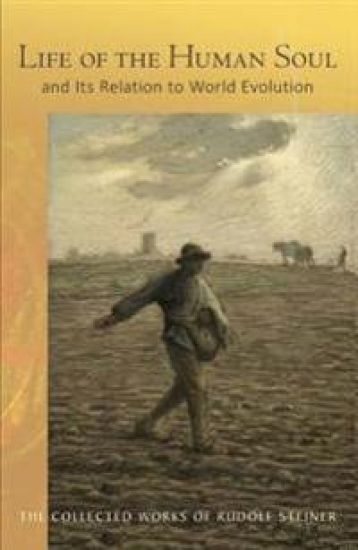
Life of the Human Soul

Life of the Human Soul

Rudolf Steiner

Rudolf Steiner Press
2016
nidottu

Halvin toimitettuna 25,60 €

How are we connected to the world around us? This question, says Rudolf Steiner, is one that lives subliminally, drawing us into the depths of the psyche. There, our candle of consciousness tends to flicker and go out. But spiritual schooling can relight it, so that we learn to perceive realms of our being beyond the restricted self. Whilst Steiner was undertaking major lecture tours of Germany and England, he took time to address his followers at the world centre of anthroposophy in Dornach, Switzerland. He speaks here on three major topics: 'The Life of the Human Soul', 'Spiritual Striving in Relation to Earth's Evolution' and 'The Contrast Between East and West'. The common theme, however, is our mutual responsibility for what the human being and the world will eventually become - which, according to Steiner, is far from a foregone conclusion. Even the way we think can change and affect the future: the degree, for example, to which we concentrate our picturing in meditation, infusing head thinking with warmth of heart. Rudolf Steiner reveals a hugely complex picture of interrelationships between humanity and the cosmos. Our head, heart, lungs and limbs all reveal subtly different qualities of connection with the invisible realities that continue to sustain us. Our eyes, for instance, only gradually evolved into organs of sight and were once vital organs, as our lungs are now. The lungs, in turn, will similarly evolve to provide us with another form of perception. As is usually the case, Steiner addresses a wide variety of topics in addition to those above. Included in this volume are thoughts on the significance of the cinema; the nature of the halo; technology as the 'true foundation' of the modern worldview; asceticism in the Middle Ages; the world of machines and the world of rite and worship; yoga and modern meditation exercises; pain as an awakener of knowledge; the emergence of the belief in ghosts; and the connection between stomach acid and soul qualities
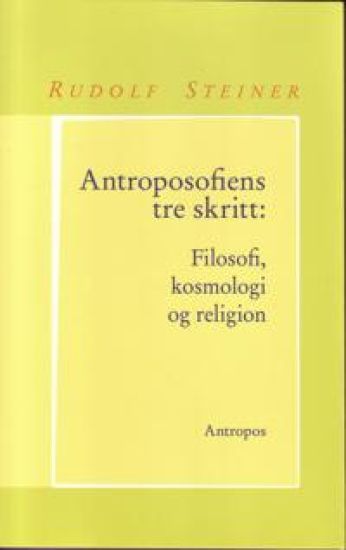
Antroposofiens tre skritt; filosofi, kosmologi og religion
Antroposofiens tre skritt - autoreferater av ti offentlige foredrag holdt i Goetheanum høsten 1922 - gir i konsentrert form en innføring i antroposofiens erkjennelsesvei. Rudolf Steiner tar utgangspunkt i filosofien, kosmologien og religionen og viser hvordan disse tre kulturytringene, som går langt tilbake i historien, i dag kan fornyes ut fra en etisk frihetsimpuls og dermed bidra til å vitalisere hele det sosiale liv.
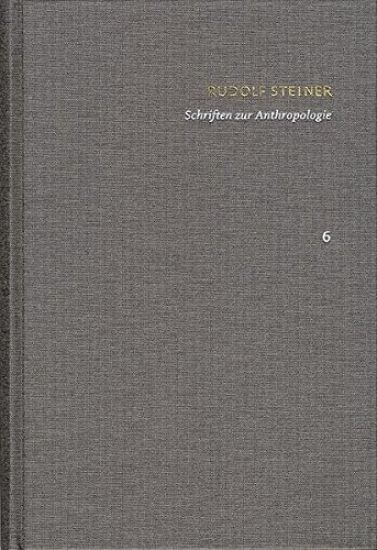
Rudolf Steiner, Schriften Zur Anthropologie

Rudolf Steiner, Schriften Zur Anthropologie

Rudolf Steiner

Frommann-Holzboog
2016
sidottu
English summary: Rudolf Steiners book Theosophy (1904) is regarded as the definitive account of the anthroposophical understanding of man (Menschenkunde). It documents how deeply Steiner delved into the theosophical world view of Annie Besant and Charles Leadbeater around the turn of the century, seeking to harmonize them with the idealistic and developmental concepts of his own Philosophy of Freedom of 1894. The edition at hand reveals the rich textual development of this foundational work in Anthroposophy through several major reworkings and critically contextualizes its concepts. Also included is a fragment of 1910 titled Anthroposophie which outlines Steiner's theory of the senses (Sinneslehre). German description: Die Theosophie (1904) stellt Rudolf Steiners klassische Darstellung der anthroposophischen Menschenkunde dar. Sie dokumentiert Steiners intensives Eintauchen in die theosophische Gedankenwelt Annie Besants und Charles Leadbeaters um die Jahrhundertwende und seinen Versuch einer Harmonisierung derselben mit seiner eigenen, stark vom deutschen Idealismus sowie von der Entwicklungslehre Ernst Haeckels gepragten Philosophie der Freiheit von 1894. Der vorliegende Band, der die wechselvolle Textgeschichte dieses Grundwerks der Anthroposophie dokumentiert und kritisch begleitet, wird erganzt durch die Fragment gebliebene Skizze einer anthroposophischen Sinneslehre (Anthroposophie) aus dem Jahre 1910.