Kirjojen hintavertailu – 12 903 725 kirjaa ja 27 kauppaa

Kirjailija

Rudolf Steiner

Kirjat ja teokset yhdessä paikassa: 1 477 kirjaa, julkaisuja vuosilta 1910–2026, suosituimpiin kuuluu The Cosmic New Year: A Course of Lectures by Rudolf Steiner. Vertaile teosten hintoja ja tarkista saatavuus suomalaisista kirjakaupoista.

1 477 kirjaa

Kirjojen julkaisuvuodet: 1910–2026.

Christianity as a Mystical Fact

Christianity as a Mystical Fact

Rudolf Steiner

Createspace Independent Publishing Platform
2016
nidottu
Christianity as Mystical Fact, and the Mysteries of Antiquity was the title given by the author to this religious study, when, eight years ago, he gathered into it the substance of lectures delivered by him in 1902. The title indicated the special character of the book. In it the attempt was made, not merely to represent historically the mystical content of Christianity, but to describe the origin of Christian history from the standpoint of mystical contemplation. Underlying this intention was the thought that at the genesis of Christianity mystical facts were at work which can only be perceived by such contemplation.
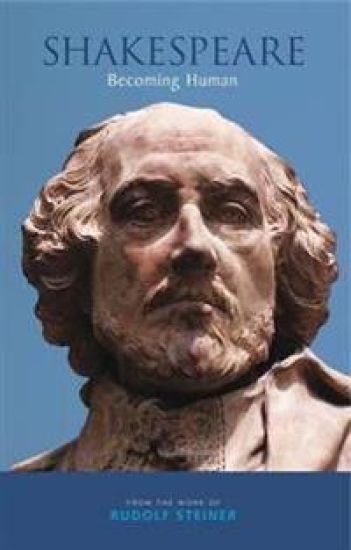
Shakespeare

Shakespeare

Rudolf Steiner

Rudolf Steiner Press
2016
pokkari
'Like so much of Renaissance Art, Shakespeare's work bears an open secret. The esoteric spiritual content is undisguised, though it may be unexpected and not always immediately recognized. And, like all the great artistic achievements...this work remains incomplete until we recognize and respond to its open invitation that we become active participants.' - from the IntroductionThe perennial universal appeal of Shakespeare's work is well established. His core themes explore the challenges of the human condition whilst celebrating the potential of human beings to achieve and develop in earthly life. But what is it that enables Shakespeare's characters to live and breathe beyond the confines of their written roles, some 400 years after the plays were first performed? In these collected lectures, edited with an extensive introduction by Andrew Wolpert, Rudolf Steiner throws new light on the Bard's work, describing the on-going life that flows from it, and the profound spiritual origins of Shakespeare's inspirations. He shows how Shakespeare can enliven us in our longing for contemporary ideals and truths; indeed, in our goal of becoming fully human. Our engagement with the plays, not just as actors and directors, but also as students and members of an audience, can thus become a co-creative participation in the redemptive potential of Shakespeare's enduring legacy. Steiner speaks about Shakespeare in connection with the evolution of the arts of poetry and drama, and the transitions between cultural epochs. He reminds us of the sources and characteristics of classical Greek drama, recalling Aristotle's definition of drama as catharsis, and pointing to Shakespeare's connection to these cultural and historical wellsprings.
Hermostuneisuus ja minuus

Hermostuneisuus ja minuus

Rudolf Steiner

SUOMEN ANTROPOSOFINEN LIITTO
2016
nidottu
Aikamme elämä asettaa ihmiselle suuria vaatimuksia. Esitelmässään Hermostuneisuus ja minuus Rudolf Steiner esittää osuvia huomioita, neuvoja ja pieniä harjoituksia, joilla ihminen voi kehittää elämänhallintaansa, parantaa muistiaan ja vahvistaa terveyttään ja mielenvoimiaan sekä oman yksilöllisyytensä keskusta, minuuttaan. Tämän esitelmän sisällöt ovat kenen tahansa omaksuttavissa. Ne edistävät tietoisuustaitoja ja ovat nykyaikana ajankohtaisempia kuin milloinkaan.
Tasapainoinen kasvu ja kasvatus

Tasapainoinen kasvu ja kasvatus

Rudolf Steiner

SUOMEN ANTROPOSOFINEN LIITTO
2016
nidottu
Professori (emer.) Reijo Wileniuksen laatima yhteenveto Rudolf Steinerin esitelmäsarjasta tuo esiin lapsen kasvuvaiheiden olennaisia piirteitä ja niiden kasvattajalle asettamia haasteita. Esitystä voidaan pitää jatkona ja täydennyksenä Steinerin esitelmään Lapsen kasvatus hengentieteen kannalta. Se on omiaan herättämään lukijan omakohtaisesti tarkastelemaan käsiteltäviä asioita ja saamaan näin virikkeitä omiin havaintoihin. Kasvatuksessa kaikki riippuu siitä, että kasvattaja todella kykenee havainnoimaan lasta.
Lapsen kasvatus hengentieteen kannalta

Lapsen kasvatus hengentieteen kannalta

Rudolf Steiner

SUOMEN ANTROPOSOFINEN LIITTO
2016
lehtivihko, moniste
Tässä kirjoituksessa Rudolf Steiner esittää pähkinänkuoressa perusajatukset, jotka vuosikymmentä myöhemmin (1919) antoivat mahdollisuuden koulu-uudistukseen, jonka tuloksena ovat nykyiset steinerkoulut. Suomessa toimii tällä hetkellä 26 steinerkoulua, joista 11 antaa lukio-opetusta. Kouluista kolme on hoitopedagogisia erityiskouluja. Steinerpäiväkoteja tai esiopetusryhmiä on Suomessa 44 (tiedot v. 2015).
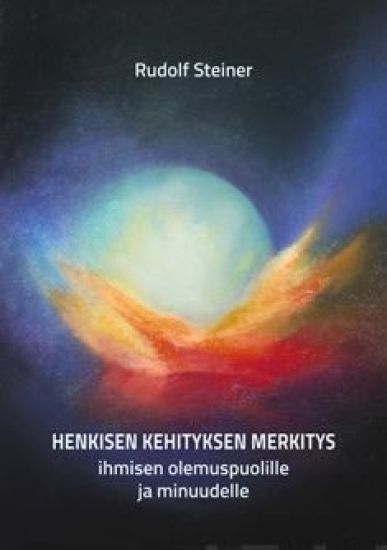
Henkisen kehityksen merkitys

Henkisen kehityksen merkitys

Rudolf Steiner; Arto Ingervo

SUOMEN ANTROPOSOFINEN LIITTO
2016
nidottu
Yhdeksän esitelmän sarja, jossa tarkastellaan historian käännekohtia ja uskonnollisia virtauksia kehittyvän tietoisuuden näkökulmasta. Tietoisuussielun kehitys johtaa luonnontieteelliseen ajatteluun ja uusiin uskonnollisiin virikkeisiin. Nykyajan ihminen joutuu vastaamaan tuon kehityksen tuomiin haasteisiin tänään ja tulevaisuudessa. Rudolf Steinerin kirjoittaman filosofisen teoksen Vapauden filosofian sekä toisaalta Goethen ajattelutavan merkitys nousee esille ratkaisuja etsittäessä.
Eternal and Transient Elements in Human Life

Eternal and Transient Elements in Human Life

Rudolf Steiner

Rudolf Steiner Press
2015
nidottu
In what has been referred to as 'the most advanced course in anthroposophy', Rudolf Steiner addresses one of the great questions of our time: the role of evil in human development. He speaks of the year 666, when three time streams intersected - the familiar linear stream and two 'lateral' streams - and the reoccurrence of the 666-year rhythm in history. At the heart of this mystery is the being Sorat ('the beast'), who attempted to flood humanity with premature spiritual knowledge by inspiring the scholars of the ancient Academy of Gondishapur. Although responsible for the saving of Aristotle's works, Steiner describes how the Academy generated tremendous but dangerous gnostic wisdom, which eventually spread through the Christian monasteries and inspired Western scientific thought. Its immediate negative impact, however, had to be counteracted by the Prophet Muhammad and the founding of Islam. In contrast to the 666-year rhythm in history, the 333-year rhythm is connected to the healing forces of the Mystery of Golgotha. The year 333 was a central point in the post-Atlantean age, but also a pivotal moment in establishing the Christ Impulse and the new equilibrium it brought to humanity, allowing people to gain wisdom through their own efforts. Such wisdom enables insight into three key areas: supersensible knowledge of birth and death; understanding of an individual's life; and the ability consciously to confront the adversarial beings of Lucifer and Ahriman. Steiner addresses a host of additional themes, including occult Freemasonry in Anglo-American countries; materialism in the Roman Catholic Church; prophetic and apocalyptic vision; dualism and fatalism in pre-Christian times; and the delusion of time and space. Seeking to awaken his listeners to the urgency of the tasks ahead of them, he urges that spiritual understanding be enlivened with enthusiasm, fire and warmth of heart.
The Human Spirit

The Human Spirit

Rudolf Steiner

Rudolf Steiner Press
2015
nidottu
'To live in truth, to wish to be true in one's whole being, will be the watchword of the future.' - Rudolf Steiner In the midst of the lies and propaganda of the Great War, Rudolf Steiner struggled to convey the truths of the human spirit. The 'truth' asserted by partisan interests, he suggested, was invariably tinged with dishonesty - whether the outright mendacities of politicians and rulers (Steiner refers here to the machinations of the British Empire), or the manipulative techniques of secret societies, intent on securing and shoring up their own power. In relation to the latter, Rudolf Steiner highlights how, whilst we tend to reject overt authority nowadays, we succumb more easily to its covert forms in the 'received wisdoms' we often unthinkingly adopt. In seeking to help his audiences discern the spiritual struggle unfolding behind outer events, Steiner describes how the intrigues that led to the war were based on intentional deceit, which served hidden aims of which the public was mostly kept in the dark. In contrast to the divisiveness of untruth, truth is based on a realization of the interconnectedness of all things - of interdependence between the realms 'below' and 'above' us. The 'I', upon which all evolution on earth is predicated, signifies an overcoming of egotism and narrow interests, together with the imaginative embrace of all beings. Its spiritual reality - that descends to us from non-material worlds and towards which we evolve through earthly lives - is the epitome of truth. Amidst many other topics covered here, Rudolf Steiner speaks about The Qur'an and the Mystery of Golgotha; Henry VIII, Thomas More and the Church of England; the Jesuits and their State in Paraguay; Freemasons, esoteric symbols, and handshakes; Madame Blavatsky's occult imprisonment by Anglo-Saxon brotherhoods; Dostoyevsky's The Brothers Karamazov; and the occult literature of Papus and Levi.