Kirjojen hintavertailu – 12 859 818 kirjaa ja 27 kauppaa
Kirjailija
Slavoj Zizek
Kirjat ja teokset yhdessä paikassa: 185 kirjaa, julkaisuja vuosilta 1991–2026, suosituimpiin kuuluu Nakanune Gospodina. Sotrjasaja ramki. Vertaile teosten hintoja ja tarkista saatavuus suomalaisista kirjakaupoista.
Slavoj iek and Srecko Horvat combine their critical clout to emphasize the dangers of ignoring Europe's growing wealth gap and the parallel rise in right-wing nationalism, which is directly tied to the fallout from the ongoing financial crisis and its prescription of imposed austerity. To general observers, the European Union's economic woes appear to be its greatest problem, but the real peril is an ongoing ideological-political crisis that threatens an era of instability and reactionary brutality. The fall of communism in 1989 seemed to end the leftist program of universal emancipation. However, nearly a quarter of a century later, the European Union has failed to produce any coherent vision that can mobilize people to action. Until recently, the only ideology receptive to European workers has been the nationalist call to "defend" against immigrant integration. Today, Europe is focused on regulating the development of capitalism and promoting a reactionary conception of its cultural heritage. Yet staying these courses, iek and Horvat show, only strips Europe of its power and stifles its political ingenuity. The best hope is for Europe to revive and defend its legacy of universal egalitarianism, which benefits all parties by preserving the promise of equal representation.
Slavoj iek and Srecko Horvat combine their critical clout to emphasize the dangers of ignoring Europe's growing wealth gap and the parallel rise in right-wing nationalism, which is directly tied to the fallout from the ongoing financial crisis and its prescription of imposed austerity. To general observers, the European Union's economic woes appear to be its greatest problem, but the real peril is an ongoing ideological-political crisis that threatens an era of instability and reactionary brutality. The fall of communism in 1989 seemed to end the leftist program of universal emancipation. However, nearly a quarter of a century later, the European Union has failed to produce any coherent vision that can mobilize people to action. Until recently, the only ideology receptive to European workers has been the nationalist call to "defend" against immigrant integration. Today, Europe is focused on regulating the development of capitalism and promoting a reactionary conception of its cultural heritage. Yet staying these courses, iek and Horvat show, only strips Europe of its power and stifles its political ingenuity. The best hope is for Europe to revive and defend its legacy of universal egalitarianism, which benefits all parties by preserving the promise of equal representation.
Slavoj Žižek is one of the world’s foremost cultural commentators: a prolific writer and thinker, whose adventurous, unorthodox and wide-ranging writings have won him a unique place as one of the most high profile thinkers of our time. The Universal Exception brings together some of Žižek’s most vivid writings on politics. Bringing together high theory, popular culture and passionate engagement with politics, Žižek here brings us startlingly new perspectives on such topics as multiculturalism, capitalism and Bill Gates, the revolutionary potential of Stalinism, the terrorist attacks of 9/11 and the war in Iraq. Including a glossary of key terms, the Bloomsbury Revelations edition also includes a new preface by the author.
Philosophical materialism in all its forms - from scientific naturalism to Deleuzian New Materialism - has failed to meet the key theoretical and political challenges of the modern world. This is the burden of philosopher Slavoj Zizek's argument in this pathbreaking and eclectic new work. Recent history has seen developments such as quantum physics and Freudian psychoanalysis, not to speak of the failure of twentieth-century communism, shake our understanding of existence. In the process, the dominant tradition in Western philosophy lost its moorings. To bring materialism up to date, Zizek - himself a committed materialist and communist - proposes a radical revision of our intellectual heritage. He argues that dialectical materialism is the only true philosophical inheritor of what Hegel designated the "speculative" approach in thought. Absolute Recoil is a startling reformulation of the basis and possibilities of contemporary philosophy. While focusing on how to overcome the transcendental approach without regressing to naïve, pre-Kantian realism, Zizek offers a series of excursions into today's political, artistic, and ideological landscape, from Arnold Schoenberg's music to the films of Ernst Lubitsch.
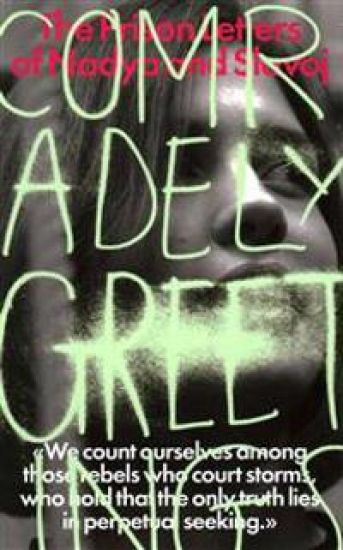
"We are the rebels asking for the storm, and believing that truth is only to be found in an endless search ... Two years of prison for Pussy Riot is our tribute to a destiny that gave us sharp ears, allowing us to sound the note A when everyone else is used to hearing G flat." In an extraordinary exchange of letters, Nadezhda Tolokonnikova, imprisoned for taking part in Pussy Riot's anti-Putin performance, and Slovenian philosopher Slavoj Zizek discuss artistic subversion, political activism, and the future of democracy via the ideas of Hegel, Deleuze, Nietzsche, and even Laurie Anderson. Two radicals, one in a Russian forced labor camp, the other writing to her from far outside its walls, show passionately - across linguistic and generational divides - that "there is still a common cause worth fighting for." Touching, erudite, and worldly, their correspondence unfolds with poetic urgency. In association with Philosophie Magazine.
What do we know about Hegel? What do we know about Marx? What do we know about democracy and totalitarianism? Communism and psychoanalysis? What do we know that isn't a platitude that we've heard a thousand times - or a self-satisfied certainty? Through his brilliant reading of Hegel, Slavoj Zizek - one of the most provocative and widely-read thinkers of our time - upends our traditional understanding, dynamites every cliché and undermines every conviction in order to clear the ground for new ways of answering these questions. When Lacan described Hegel as the ‘most sublime hysteric’, he was referring to the way that the hysteric asks questions because he experiences his own desire as if it were the Other's desire. In the dialectical process, the question asked of the Other is resolved through a reflexive turn in which the question begins to function as its own answer. We had made Hegel into the theorist of abstraction and reaction, but by reading Hegel with Lacan, Zizek unveils a Hegel of the concrete and of revolution - his own, and the one to come. This early and dazzlingly original work by Zizek offers a unique insight into the ideas which have since become hallmarks of his mature thought. It will be of great interest to anyone interested in critical theory, philosophy and contemporary social thought.
What do we know about Hegel? What do we know about Marx? What do we know about democracy and totalitarianism? Communism and psychoanalysis? What do we know that isn't a platitude that we've heard a thousand times - or a self-satisfied certainty? Through his brilliant reading of Hegel, Slavoj Zizek - one of the most provocative and widely-read thinkers of our time - upends our traditional understanding, dynamites every cliché and undermines every conviction in order to clear the ground for new ways of answering these questions. When Lacan described Hegel as the ‘most sublime hysteric’, he was referring to the way that the hysteric asks questions because he experiences his own desire as if it were the Other's desire. In the dialectical process, the question asked of the Other is resolved through a reflexive turn in which the question begins to function as its own answer. We had made Hegel into the theorist of abstraction and reaction, but by reading Hegel with Lacan, Zizek unveils a Hegel of the concrete and of revolution - his own, and the one to come. This early and dazzlingly original work by Zizek offers a unique insight into the ideas which have since become hallmarks of his mature thought. It will be of great interest to anyone interested in critical theory, philosophy and contemporary social thought.
Probably the most famous living philosopher, Slavoj Žižek explores the concept of 'event', in the second in this new series of easily digestible philosophyWhat is really happening when something happens? In the second in a new series of accessible, commute-length books of original thought, Slavoj Žižek, one of the world's greatest living philosophers, examines the new and highly-contested concept of Event. An Event can be an occurrence that shatters ordinary life, a radical political rupture, a transformation of reality, a religious belief, the rise of a new art form, or an intense experience such as falling in love. Taking us on a trip which stops at different definitions of Event, Žižek addresses fundamental questions such as: are all things connected? How much are we agents of our own fates? Which conditions must be met for us to perceive something as really existing? In a world that's constantly changing, is anything new really happening? Drawing on references from Plato to arthouse cinema, the Big Bang to Buddhism, Event is a journey into philosophy at its most exciting and elementary. Slavoj Žižek is a Hegelian philosopher, Lacanian psychoanalyst, and Communist political activist. He is the author of numerous books on dialectical materialism, critique of ideology and art. His main work is Less Than Nothing, a study on the actuality of Hegelian dialectics.
Slavoj Žižek is one of the world’s foremost cultural commentators: a prolific writer and thinker, whose vividly adventurous, unorthodox and wide-ranging writings have won him a unique place as one of the most high profile thinkers of our time. Covering psychoanalysis, philosophy and popular culture and drawing on a heady mix of Marxist politics, Hegelian dialectics and Lacanian psychoanalysis, the writings collected in Interrogating the Real reflect not only the remarkable extent of Žižek’s varied interests, but also reveal his controversial and dynamic style.
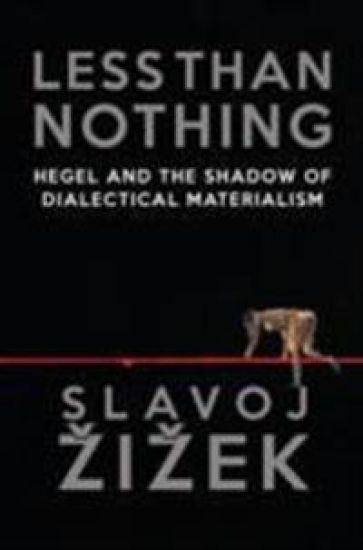
For the last two centuries, Western philosophy has developed in the shadow of Hegel, an influence each new thinker struggles to escape. As a consequence, Hegel's absolute idealism has become the bogeyman of philosophy, obscuring the fact that he is the defining philosopher of the historical transition to modernity, a period with which our own times share startling similarities. Today, as global capitalism comes apart at the seams, we are entering a new period of transition. In Less Than Nothing, the product of a career-long focus on the part of its author, Slavoj Zizek argues it is imperative we not simply return to Hegel but that we repeat and exceed his triumphs, overcoming his limitations by being even more Hegelian than the master himself. Such an approach not only enables Zizek to diagnose our present condition, but also to engage in a critical dialogue with the key strands of contemporary thought-Heidegger, Badiou, speculative realism, quantum physics, and cognitive sciences. Modernity will begin and end with Hegel.
Where are we today and what is to be done? Slavoj Zizek ponders these questions in this unique and timely book. Based on live interviews, the book captures Zizek at his irrepressible best, elucidating such topics as the uprisings of the Arab Spring, the global financial crisis, populism in Latin America, the rise of China and even the riddle of North Korea. Zizek dazzles readers with his analyses of Hollywood films, Venezuelan police reports, Swedish crime fiction and much else. Wherever the conversation turns, his energetic mind illuminates unexpected horizons. While analyzing our present predicaments, Zizek also explores possibilities for change. What sort of society is worth striving for? Why is it difficult to imagine alternative social and political arrangements? What are the bases for hope? A key obligation in our troubled times, argues Zizek, is to dare to ask fundamental questions: we must reflect and theorize anew, and always be prepared to rethink and redefine the limits of the possible. These original and compelling conversations offer an engaging and accessible introduction to one of the most important thinkers of our time.
Where are we today and what is to be done? Slavoj Zizek ponders these questions in this unique and timely book. Based on live interviews, the book captures Zizek at his irrepressible best, elucidating such topics as the uprisings of the Arab Spring, the global financial crisis, populism in Latin America, the rise of China and even the riddle of North Korea. Zizek dazzles readers with his analyses of Hollywood films, Venezuelan police reports, Swedish crime fiction and much else. Wherever the conversation turns, his energetic mind illuminates unexpected horizons. While analyzing our present predicaments, Zizek also explores possibilities for change. What sort of society is worth striving for? Why is it difficult to imagine alternative social and political arrangements? What are the bases for hope? A key obligation in our troubled times, argues Zizek, is to dare to ask fundamental questions: we must reflect and theorize anew, and always be prepared to rethink and redefine the limits of the possible. These original and compelling conversations offer an engaging and accessible introduction to one of the most important thinkers of our time.
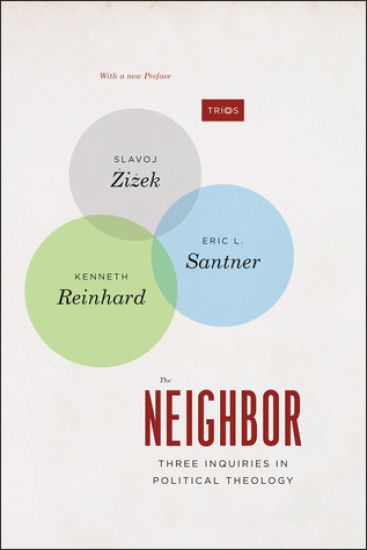
In "The Neighbor", three of the most significant intellectuals working in psychoanalysis and critical theory collaborate to show how the problem of neighbor love opens questions that are fundamental to ethical inquiry and suggest a new theological configuration of political theory. Their three extended essays explore today's central historical problem: the persistence of the theological in the political. In "Toward a Political Theology of the Neighbor," Kenneth Reinhard supplements Carl Schmitt's political theology of the enemy and friend with a political theology of the neighbor based in psychoanalysis. In "Miracles Happen," Eric L. Santner extends the book's exploration of neighbor love through a bracing reassessment of Benjamin and Rosenzweig. And in an impassioned plea for ethical violence, Slavoj Zizek's "Neighbors and Other Monsters" reconsiders the idea of excess to rehabilitate a positive sense of the inhuman and challenge the influence of Levinas on contemporary ethical thought. A rich and suggestive account of the interplay between love and hate, self and other, personal and political, "The Neighbor" has proven to be a touchstone across the humanities and a crucial text for understanding the persistence of political theology in secular modernity. This new edition contains a new preface by the authors.
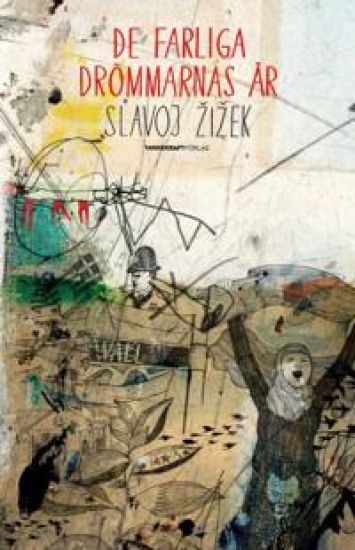
På persiska finns ett underbart uttryck, war nam nihadan, som betyder ”att mörda någon, begrava hans kropp och låta blommor växa över liket för att dölja det”. År 2011 bevittnade vi (och deltog i) en rad skakande händelser, från den arabiska våren till Occupy Wall Street-rörelsen, från protesterna i de brittiska förorterna till Breiviks ideologiska vansinne. Detta år var således ett år av farliga drömmar som pekade i helt motsatta riktningar: å ena sidan emancipatoriska drömmar som mobiliserade demonstranter i New York, på Tahrirtorget, i London och i Aten; å andra sidan dunkla och destruktiva drömmar som drev fram Breivik och rasistiska populister över hela Europa, från Nederländerna till Ungern. Den hegemoniska ideologins primära uppgift blev att neutralisera den sanna dimensionen av dessa händelser. Var inte den förhärskande reaktionen från mediernas sida just ett war nam nihadan? Medierna dödade den radikala emancipatoriska potentialen i dessa händelser, eller dolde det hot som de riktade mot demokratin, och de sådde blommor över det nedgrävda liket. Just av detta skäl är det så viktigt att reda ut begreppen, att placera dessa händelser inom ramen för den globala kapitalismen som helhet, eller med andra ord att visa hur de förhåller sig till den centrala antagonismen i dagens kapitalism.
En El resto indivisible, Slavoj Zizek recorre la trayectoria filos fica de Friedrich Schelling y de Hegel con su particular estilo, que le permite realizar cruces interesantes entre psicoan lisis, f sica cu ntica y religi n. Lacan, Freud, Einstein, entre tantos otros pensadores, aparecen en esta obra de Slavoj Zizek.
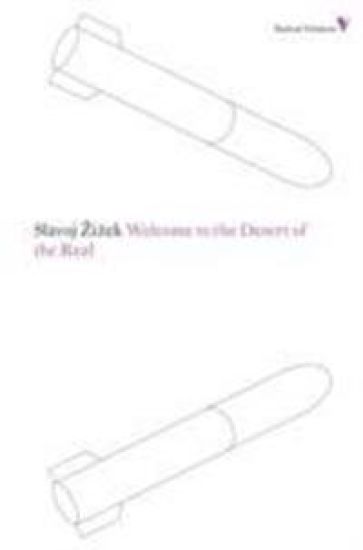
Liberals and conservatives proclaim the end of the American holiday from history. Now the easy games are over; one should take sides. Zizek argues this is precisely the temptation to be resisted. In such moments of apparently clear choices, the real alternatives are most hidden. Welcome to the Desert of the Real steps back, complicating the choices imposed on us. It proposes that global capitalism is fundamentalist and that America was complicit in the rise of Muslim fundamentalism. It points to our dreaming about the catastrophe in numerous disaster movies before it happened, and explores the irony that the tragedy has been used to legitimize torture. Last but not least it analyzes the fiasco of the predominant leftist response to the events.