Kirjojen hintavertailu – 12 859 818 kirjaa ja 27 kauppaa

Kirjailija

Slavoj Zizek

Kirjat ja teokset yhdessä paikassa: 185 kirjaa, julkaisuja vuosilta 1991–2026, suosituimpiin kuuluu Nakanune Gospodina. Sotrjasaja ramki. Vertaile teosten hintoja ja tarkista saatavuus suomalaisista kirjakaupoista.

Nimi esiintyy myös muodoissa: Slavoj Žižek

185 kirjaa

Kirjojen julkaisuvuodet: 1991–2026.

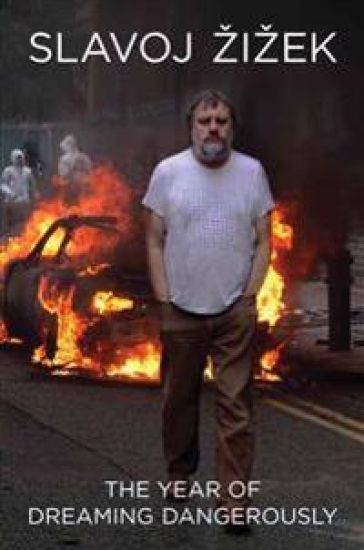
The Year of Dreaming Dangerously

The Year of Dreaming Dangerously

Slavoj Zizek

Verso Books
2012
nidottu
Call it the year of dreaming dangerously: 2011 caught the world off guard with a series of shattering events. While protesters in New York, Cairo, London, and Athens took to the streets in pursuit of emancipation, obscure destructive fantasies inspired the world's racist populists in places as far apart as Hungary and Arizona, achieving a horrific consummation in the actions of mass murderer Anders Breivik. The subterranean work of dissatisfaction continues. Rage is building, and a new wave of revolts and disturbances will follow. Why? Because the events of 2011 augur a new political reality. These are limited, distorted-sometimes even perverted-fragments of a utopian future lying dormant in the present.
Democracy in What State?

Democracy in What State?

Giorgio Agamben; Alain Badiou; Daniel Bensaid; Wendy Brown; Jean-Luc Nancy; Jacques Rancière; Kristin Ross; Slavoj Žižek

Columbia University Press
2012
pokkari
"Is it meaningful to call oneself a democrat? And if so, how do you interpret the word?" In responding to this question, eight iconoclastic thinkers prove the rich potential of democracy, along with its critical weaknesses, and reconceive the practice to accommodate new political and cultural realities. Giorgio Agamben traces the tense history of constitutions and their coexistence with various governments. Alain Badiou contrasts current democratic practice with democratic communism. Daniel Bensaid ponders the institutionalization of democracy, while Wendy Brown discusses the democratization of society under neoliberalism. Jean-Luc Nancy measures the difference between democracy as a form of rule and as a human end, and Jacques Ranciere highlights its egalitarian nature. Kristin Ross identifies hierarchical relationships within democratic practice, and Slavoj Zizek complicates the distinction between those who desire to own the state and those who wish to do without it. Concentrating on the classical roots of democracy and its changing meaning over time and within different contexts, these essays uniquely defend what is left of the left-wing tradition after the fall of Soviet communism. They confront disincentives to active democratic participation that have caused voter turnout to decline in western countries, and they address electoral indifference by invoking and reviving the tradition of citizen involvement. Passionately written and theoretically rich, this collection speaks to all facets of modern political and democratic debate.
Organs without Bodies

Organs without Bodies

Slavoj Zizek

Routledge
2012
nidottu
With a new introduction by the authorIn this deliciously polemical work, a giant of cultural theory immerses himself in the ideas of a giant of French thought. In his inimical style, Zizek links Deleuze's work with both Oedipus and Hegel, figures from whom the French philosopher distanced himself. Zizek turns some Deleuzian concepts around in order to explore the 'organs without bodies' in such films as Fight Club and the works of Hitchcock. Finally, he attacks what he sees as the 'radical chic' Deleuzians, arguing that such projects turn Deleuze into an ideologist of today's 'digital capitalism'. With his brilliant energy and fearless argumentation, Zizek sets out to restore a truer, more radical Deleuze than the one we thought we knew.
God In Pain

God In Pain

Slavoj Zizek; Boris Gunjevic

Seven Stories Press,U.S.
2012
nidottu

Halvin toimitettuna 21,80 €

A brilliant dissection and reconstruction of the three major faith-based systems of belief in the world today, from one of the world's most articulate intellectuals, Slavoj Zizek, in conversation with Croatian philosopher Boris Gunjevic. In six chapters that describe Christianity, Islam, and Judaism in fresh ways using the tools of Hegelian and Lacanian analysis, God in Pain: Inversions of Apocalypse shows how each faith understands humanity and divinity--and how the differences between the faiths may be far stranger than they may at first seem. Chapters include (by Zizek) (1) "Christianity Against Sacred," (2) "Glance into the Archives of Islam," (3) "Only Suffering God Can Save Us," (4) "Animal Gaze," (5) "For the Theologico-Political Suspension of the Ethical," (by Gunjevic) (1) "Mistagogy of Revolution," (2) "Virtues of Empire," (3) "Every Book Is Like Fortress," (4) "Radical Orthodoxy," (5) "Prayer and Wake."
Att läsa Hegel

Att läsa Hegel

Judith Butler; Slavoj Zizek; Fredric Jameson; Susan Buck-Morss; Jacques Derrida; Jurgen Habermas

Tankekraft Förlag
2012
kartonkisidos
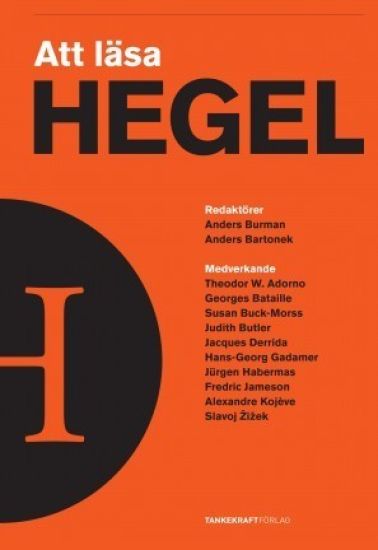
Georg Wilhelm Friedrich Hegel utgör på många sätt portalfiguren för de senaste två århundradenas filosofi och politiska teori. Såväl marxismen som existentialismen, fenomenologin och den kritiska teorin, ja även den moderna analytiska filosofin, uppstod till stor del som reaktioner på hans tänkande och den hegelianism som utvecklades efter hans död. Föreliggande antologi samlar tio tongivande läsningar av Hegel, skrivna av några av den så kallade kontinentalfilosofiska traditionens mest betydelsefulla företrädare. På olika sätt fokuserar samtliga texter på Hegels politiska tänkande. Särskilt uppmärksammas den berömda utläggningen i Andens fenomenologi om begäret, kampen om erkännandet och den dialektiska relationen mellan herren och slaven, men även Hegels idé om det borgerliga samhället och hans syn på staten diskuteras i flera av bidragen. Sammantaget visar texterna att det finns goda skäl att betrakta Hegel som den förste moderne filosofen. Bokens redaktörer, idéhistorikern Anders Burman och filosofen Anders Bartonek, är verksamma vid Södertörns högskola.
Did Somebody Say Totalitarianism?

Did Somebody Say Totalitarianism?

Slavoj Zizek

Verso Books
2011
nidottu
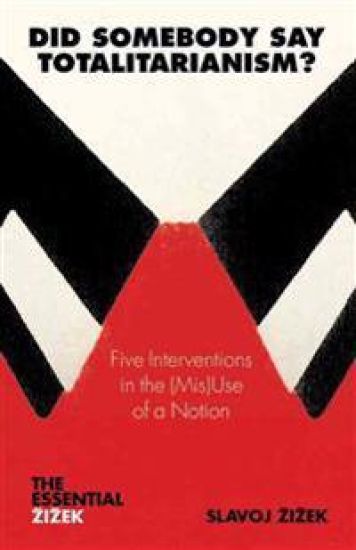
In some circles, a nod towards totalitarianism is enough to dismiss any critique of the status quo. Such is the insidiousness of the neo-liberal ideology, argues Slavoj Zizek. Did Somebody Say Totalitarianism? turns a specious rhetorical strategy on its head to identify a network of family resemblances between totalitarianism and modern liberal democracy. Zizek argues that totalitarianism is invariably defined in terms of four things: the Holocaust as the ultimate, diabolical evil; the Stalinist gulag as the alleged truth of the socialist revolutionary project; ethnic and religious fundamentalisms, which are to be fought through multiculturalist tolerance; and the deconstructionist idea that the ultimate root of totalitarianism is the ontological closure of thought. Zizek concludes that the devil lies not so much in the detail but in what enables the very designation totalitarian: the liberal-democratic consensus itself.
Kommunismens idé

Kommunismens idé

Slavoj Zizek; Antonio Negri; Jacques Rancière; Alain Badiou

Tankekraft Förlag
2011
nidottu
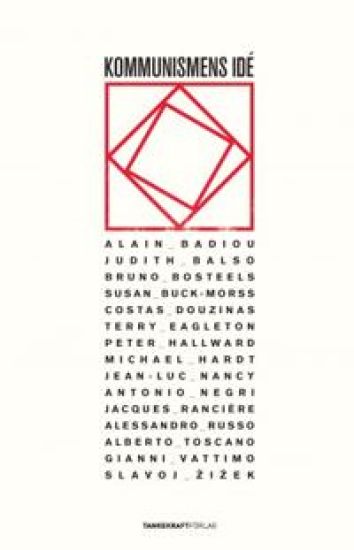
Att göra åtskillnad mellan kommunismens löften och 1900-talets totalitära tragedier är ingen enkel uppgift. Men i en värld som hotas av miljömässiga katastrofer, nya former av apartheid och oöverstigliga klyftor mellan inkluderade och exkluderade finns det ett akut behov av nya idéer som kan vägleda strävan efter ett verkligt fritt och jämlikt samhälle. I denna volym ger femton av dagens viktigaste vänsterteoretiker sin syn på kommunismens begrepp. Utifrån olika infallsvinkar diskuterar de möjligheten av att gentemot kapitalismens kriser och privatiseringar återupprätta kommunismen som namnet på den radikala filosofin och politiken. I kontrast till den rådande uppdelningen i privat och offentligt pekar kommunismen fram mot det gemensamma i den mänskliga tillvaron, de delade resurser och förmågor som kan göra en annan värld möjlig. "Var inte rädda, anslut er till oss, kom tillbaka! Ni har haft era antikommunistiska eskapader, och vi förlåter er för dem men nu är det dags för allvar igen!" Slavoj Zizek
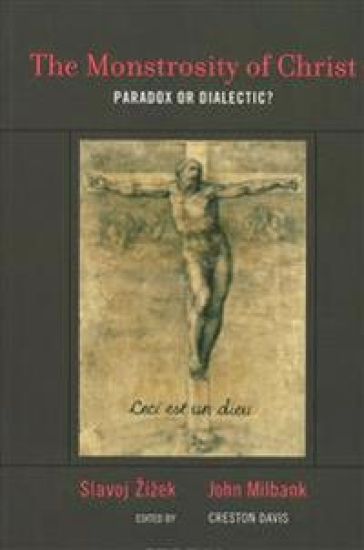
The Monstrosity of Christ

The Monstrosity of Christ

Slavoj Žižek; John Milbank

MIT Press
2011
pokkari
A militant Marxist atheist and a "Radical Orthodox" Christian theologian square off on everything from the meaning of theology and Christ to the war machine of corporate mafia." What matters is not so much that Zizek is endorsing a demythologized, disenchanted Christianity without transcendence, as that he is offering in the end (despite what he sometimes claims) a heterodox version of Christian belief."-John Milbank"To put it even more bluntly, my claim is that it is Milbank who is effectively guilty of heterodoxy, ultimately of a regression to paganism: in my atheism, I am more Christian than Milbank."-Slavoj ZizekIn this corner, philosopher Slavoj Zizek, a militant atheist who represents the critical-materialist stance against religion's illusions; in the other corner, "Radical Orthodox" theologian John Milbank, an influential and provocative thinker who argues that theology is the only foundation upon which knowledge, politics, and ethics can stand. In The Monstrosity of Christ, Zizek and Milbank go head to head for three rounds, employing an impressive arsenal of moves to advance their positions and press their respective advantages. By the closing bell, they have not only proven themselves worthy adversaries, they have shown that faith and reason are not simply and intractably opposed. Zizek has long been interested in the emancipatory potential offered by Christian theology. And Milbank, seeing global capitalism as the new century's greatest ethical challenge, has pushed his own ontology in more political and materialist directions. Their debate in The Monstrosity of Christ concerns the future of religion, secularity, and political hope in light of a monsterful event-God becoming human. For the first time since Zizek's turn toward theology, we have a true debate between an atheist and a theologian about the very meaning of theology, Christ, the Church, the Holy Ghost, Universality, and the foundations of logic. The result goes far beyond the popularized atheist/theist point/counterpoint of recent books by Christopher Hitchens, Richard Dawkins, and others. Zizek begins, and Milbank answers, countering dialectics with "paradox." The debate centers on the nature of and relation between paradox and parallax, between analogy and dialectics, between transcendent glory and liberation. Slavoj Zizek is a philosopher and cultural critic. He has published over thirty books, including Looking Awry, The Puppet and the Dwarf, and The Parallax View (these three published by the MIT Press). John Milbank is an influential Christian theologian and the author of Theology and Social Theory: Beyond Secular Reason and other books. Creston Davis, who conceived of this encounter, studied under both Zizek and Milbank.

Democracy in What State?

Democracy in What State?

Giorgio Agamben; Alain Badiou; Daniel Bensaid; Wendy Brown; Jean-Luc Nancy; Jacques Rancière; Kristin Ross; Slavoj Žižek

Columbia University Press
2011
sidottu
"Is it meaningful to call oneself a democrat? And if so, how do you interpret the word?" In responding to this question, eight iconoclastic thinkers prove the rich potential of democracy, along with its critical weaknesses, and reconceive the practice to accommodate new political and cultural realities. Giorgio Agamben traces the tense history of constitutions and their coexistence with various governments. Alain Badiou contrasts current democratic practice with democratic communism. Daniel Bensaid ponders the institutionalization of democracy, while Wendy Brown discusses the democratization of society under neoliberalism. Jean-Luc Nancy measures the difference between democracy as a form of rule and as a human end, and Jacques Ranciere highlights its egalitarian nature. Kristin Ross identifies hierarchical relationships within democratic practice, and Slavoj Zizek complicates the distinction between those who desire to own the state and those who wish to do without it. Concentrating on the classical roots of democracy and its changing meaning over time and within different contexts, these essays uniquely defend what is left of the left-wing tradition after the fall of Soviet communism. They confront disincentives to active democratic participation that have caused voter turnout to decline in western countries, and they address electoral indifference by invoking and reviving the tradition of citizen involvement. Passionately written and theoretically rich, this collection speaks to all facets of modern political and democratic debate.
Fronesis 19-20. Det politiska

Fronesis 19-20. Det politiska

Wendy Brown; Slavoj Zizek; Jacques Ranciere

Fronesis
2011
lehtivihko, moniste
Det talas i dag om politikens död. Tron på en kollektiv politisk befrielse har ersatts av individuella livsstilar och riskhantering. Det som en gång sades vara politikens förlängning, kriget, blivit det ord som i stället för politik ska uttrycka kollektiv handlingskraft. Men om politiken i dag är allt annat än politik – var kan man då finna »det politiska« i politiken? Men om samtiden kännetecknas av politik som är allt annat än politik – var kan man då finna en politik som är politisk? Vad är ”det politiska” i politiken? Det är denna grundläggande frågeställning som Fronesis nr 19-20 vill undersöka, genom att vända sig till en rad samtida internationella politisk-filosofiska debatter. Innehåll i Fronesis nr 19-20 (237 sidor): • Leila Brännström, Klas Gustavsson, Johan Lindgren och Magnus Wennerhag: Den postpolitiska eran? • Leila Brännström: På spaning efter den politik som flytt • Wendy Brown: Moralism som antipolitik • Slavoj Zizek: Carl Schmitt i den postpolitiska tidsåldern • Thomas Lemke: Immunologik – till kritiken av den politiska anatomin • Luka Arsenjuk: Introduktion till Jacques Rancière • Jacques Rancière: Tio teser om politik • Fredrika Spindler: Multitudens ontologi • Warren Montag: Spinoza – politik i en värld utan trancendens • Étienne Balibar: Spinoza, anti-Orwell • Ernesto Laclau och Roy Bhaskar: Diskursteori kontra kritisk realism • Thomas Brante: Några ord om realismen, Bhaskar och Laclau • Anders Kalat: Kommentar till diskussionen mellan Laclau och Bhaskar • Chamsy el-Ojeili: "Röra sig framåt utan auktoritet"
Contingency, Hegemony, Universality

Contingency, Hegemony, Universality

Ernesto Laclau; Judith Butler; Slavoj Zizek

Verso Books
2011
nidottu

Halvin toimitettuna 20,30 €

What is the contemporary legacy of Gramsci's notion of Hegemony? How can universality be reformulated now that its spurious versions have been so thoroughly criticized? In this ground-breaking project, Judith Butler, Ernesto Laclau and Slavoj Zizek engage in a dialogue on central questions of contemporary philosophy and politics. Their essays, organized as separate contributions that respond to one another, range over the Hegelian legacy in contemporary critical theory, the theoretical dilemmas of multiculturalism, the universalism-versus-particularism debate, the strategies of the Left in a globalized economy, and the relative merits of post-structuralism and Lacanian psychoanalysis for a critical social theory. While the rigor and intelligence with which these writers approach their work is formidable, Contingency, Hegemony, Universality benefits additionally from their clear sense of energy and enjoyment in a revealing and often unpredictable exchange.
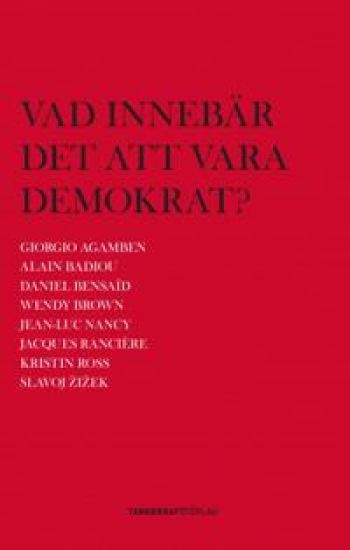
Vad innebär det att vara demokrat?

Vad innebär det att vara demokrat?

Slavoj Zizek; Giorgio Agamben; Jacques Ranciere; Wendy Brown

Tankekraft Förlag
2010
kartonkisidos
Finns det någon mening med att kalla sig "demokrat" i en samtid där praktiskt taget alla kallar sig demokrater? Kan ett begrepp som tycks kunna betyda både allt och inget fortfarande ha ett meningsfullt politiskt innehåll? I föreliggande bok åtar sig några av vår tids mest namnkunniga politiska teoretiker att besvara denna provokativa fråga. Svaren de presenterar formuleras utifrån skilda utgångspunkter och leder i flera fall till helt olika slutsatser. Samtidigt förenas de alla av ett gemensamt grundantagande: "demokrati" kan inte vara namnet på en redan förverkligad samhällsmodell eller en metod för att med jämna mellanrum utse politiska ledare. Tvärtom fortsätter demokratibegreppet att vara föremål för kamp och fungera som kärna åt politikens mest centrala frågor.
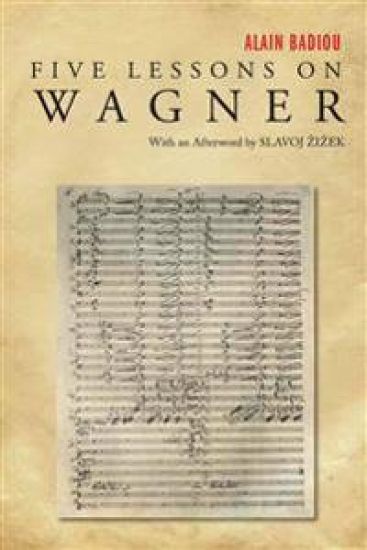
Five Lessons on Wagner

Five Lessons on Wagner

Slavoj Zizek; Alain Badiou

Verso Books
2010
nidottu

Halvin toimitettuna 31,30 €

For over a century, Richard Wagner's music has been the subject of intense debate among philosophers, many of whom have attacked its ideological-some say racist and reactionary-underpinnings. In this major new work, Alain Badiou, radical philosopher and keen Wagner enthusiast, offers a detailed reading of the critical responses to the composer's work, which include Adorno's writings on the composer and Wagner's recuperation by Nazism as well as more recent readings by Philippe Lacoue-Labarthe and others. Slavoj Zizek provides an afterword, and both philosophers make a passionate case for re-examining the relevance of Wagner to the contemporary world.
Ideologiens sublime objekt

Ideologiens sublime objekt

Slavoj Zizek

Gyldendal
2010
nidottu
Den slovenske filosof og sociolog Slavoj Žižek er en af vor tids mest markante intellektuelle og en iøjnefaldende skikkelse i såvel akademiske kredse som i offentligheden. Han er forfatter til en lang række bøger og artikler, hvor analyser af populærkultur og politik blandes med teoretiske landvindinger - ofte med fokus på den franske psykoanalytiker Jacques Lacan. Ideologiens sublime objekt udkom første gang i 1988 og er Žižeks gennembrudsværk. Bogen er et af Žižeks absolutte hovedværker og sætter fokus på ideologi - de ofte skjulte og automatiserede regler for, hvad der anses for godt og normalt. Žižek sætter sig for at analysere, ikke alene hvordan ideologier virker, men også hvorfor de virker. Det giver anledning til en række banebrydende analyser af, hvorfor mennesker har en tendens til at tilslutte sig normer, uanset hvor ubehagelige de måtte forekomme - hele tiden med Žižeks karakteristiske sans for hverdagsfænomener som film og litteratur. Ideologiens sublime objekt er oversat fra engelsk af Morten Visby. Slavoj Žižek er seniorforsker på Institut for Sociologi, Ljubljana Universitet. Desuden er han tilknyttet en lang række førende universiteter verden over.
Först som tragedi sedan som fars

Först som tragedi sedan som fars

Slavoj Zizek

Tankekraft Förlag
2010
kartonkisidos
Attentaten mot tvillingtornen den 11 september 2001 och finanskraschen under hösten 2008 var kanske de två mest definierande händelserna under 2000-talets första decennium. Ändå är det få som har sett något samband mellan dem. Enligt Slavoj iek bör de dock tolkas som en dubbel dödsstöt för 90-talets liberaldemokratiska utopi och en illustration av Marx anmärkning om att historien alltid upprepar sig två gånger först som tragedi, sedan som fars. I ljuset av den rådande världsordningens oförmåga att hantera vår tids akuta problem är det dags för vänstern att sluta be om ursäkt för det förflutna och istället skapa ett radikalt och genomförbart alternativ till liberalismen. När till och med makthavarna själva har övergett tron på liberalismen, vilket de massiva statsingripandena under finanskrisen tydliggjorde, står det enda egentliga valet inför framtiden mellan socialism och kommunism. Slavoj iek är en slovensk kritiker och filosof som verkar i en marxistisk och psykoanalytisk tradition. Bland hans många uppmärksammade böcker märks Ideologins sublima objekt, Välkommen till verklighetens öken och In Defense of Lost Causes
Mythology, Madness, and Laughter

Mythology, Madness, and Laughter

Markus Gabriel; Slavoj Žižek

Continuum Publishing Corporation
2009
sidottu

Halvin toimitettuna 94,70 €

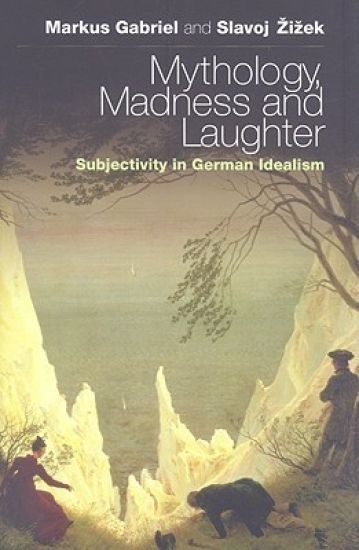
This is a hugely important book that rediscovers three crucial, but long overlooked themes in German idealism: mythology, madness and laughter. "Mythology, Madness and Laughter: Subjectivity in German Idealism" explores some long neglected but crucial themes in German idealism. Markus Gabriel, one of the most exciting young voices in contemporary philosophy, and Slavoj Zizek, the celebrated contemporary philosopher and cultural critic, show how these themes impact on the problematic relations between being and appearance, reflection and the absolute, insight and ideology, contingency and necessity, subjectivity, truth, habit and freedom. Engaging with three central figures of the German idealist movement, Hegel, Schelling and Fichte, Gabriel and Zizek, who here shows himself to be one of the most erudite and important scholars of German idealism, ask how is it possible for Being to appear in reflection without falling back into traditional metaphysics. By applying idealistic theories of reflection and concrete subjectivity, including the problem of madness and everydayness in Hegel, this hugely important book aims to reinvigorate a philosophy of finitude and contingency, topics at the forefront of contemporary European philosophy.
Philosophy in the Present

Philosophy in the Present

Alain Badiou; Slavoj Zizek

Polity Press
2009
sidottu
Two controversial thinkers discuss a timeless but nonetheless urgent question: should philosophy interfere in the world? Nothing less than philosophy is at stake because, according to Badiou, philosophy is nothing but interference and commitment and will not be restrained by academic discipline. Philosophy is strange and new, and yet speaks in the name of all - as Badiou shows with his theory of universality. Similarly, Zizek believes that the philosopher must intervene, contrary to all expectations, in the key issues of the time. He can offer no direction, but this only shows that the question has been posed incorrectly: it is valid to change the terms of the debate and settle on philosophy as abnormality and excess. At once an invitation to philosophy and an introduction to the thinking of two of the most topical and controversial philosophers writing today, this concise volume will be of great interest to students and general readers alike.
Philosophy in the Present

Philosophy in the Present

Alain Badiou; Slavoj Zizek

Polity Press
2009
nidottu

Halvin toimitettuna 30,50 €

Two controversial thinkers discuss a timeless but nonetheless urgent question: should philosophy interfere in the world? Nothing less than philosophy is at stake because, according to Badiou, philosophy is nothing but interference and commitment and will not be restrained by academic discipline. Philosophy is strange and new, and yet speaks in the name of all - as Badiou shows with his theory of universality. Similarly, Zizek believes that the philosopher must intervene, contrary to all expectations, in the key issues of the time. He can offer no direction, but this only shows that the question has been posed incorrectly: it is valid to change the terms of the debate and settle on philosophy as abnormality and excess. At once an invitation to philosophy and an introduction to the thinking of two of the most topical and controversial philosophers writing today, this concise volume will be of great interest to students and general readers alike.
In Search of Wagner

In Search of Wagner

Theodor Adorno; Slavoj Zizek

Verso Books
2009
nidottu
Written in exile from Germany, this potent study of Europe's most controversial composer explodes the frontiers of musical and cultural analysis. Measuring key elements of Wagner's oeuvre with patent musical dexterity, Adorno sheds light on a nineteenth-century bourgeois figure whose operas betray the social gestures and high-culture fantasies that helped plant the seeds of the modern Culture Industry. A foreword by Slavoj Zizek situates Adorno's reflections within present debates over Wagner's anti-Semitism and the moral status of his work, proving why this book remains one of the most important character studies of the twentieth century.