Kirjojen hintavertailu – 12 903 724 kirjaa ja 27 kauppaa

Kirjailija

Office of Air Force History

Kirjat ja teokset yhdessä paikassa: 219 kirjaa, julkaisuja vuosilta 1983–2015, suosituimpiin kuuluu Pearl to V-J Day: World War II in the Pacific. Vertaile teosten hintoja ja tarkista saatavuus suomalaisista kirjakaupoista.

219 kirjaa

Kirjojen julkaisuvuodet: 1983–2015.

Khobar Towers: Tragedy and Response

Khobar Towers: Tragedy and Response

U. S. Air Force; Office of Air Force History

Createspace Independent Publishing Platform
2015
nidottu
America's mind's eye carries all too many painful pictures of terrorist actions against her: the collapsed Marine Corps barracks in Beirut, a gapinghole at the waterline of USS Cole, and shocked, bleeding casualties sitting in the streets of the U. S. embassy in Kenya, as well as fire blossoming from New York City's Twin Towers. Another enduring image is the shredded walls of Khobar Towers where nineteen airmen gave their final full measure on June 25, 1996. This account of the Khobar Towers bombing, so eloquently narrated by Dr. Perry Jamieson, tells the story of the horrific attack and the magnificentresponse of airmen doing their duty under nearly impossible circumstances. None of them view their actions as heroic, yet the reader will marvel at their calm professionalism. All of them say it was just their job, but the reader will wonder how they could be so well trained to act almost instinctively to do the right thing at the right time. None of them would see their actions as selfless, yet countless numbers refused medical attention until the more seriously injured got treatment. Throughout this book, the themes of duty, commitment, and devotion to comrades resoundingly underscore the notion that America's brightest, bravest, and best wear her uniforms in service to the nation. This book is more than heroic actions, though, for there is also controversy. Were commanders responsible for not adequately protecting their people? What should one make of the several conflicting investigations following the attack? Dr. Jamieson has not shied away from these difficult questions, and others, but has discussed them and other controversial judgments in a straightforward and dispassionate way that will bring them into focus for everyone. It is clear from this book that there is a larger issue than just the response to the bombing. It is the issue of the example set by America's airmen. Future airmen who read this book will be stronger and will stand on the shoulders of those who suffered and those who made the ultimate sacrifice. No matter what conclusions the reader might each, one continues to return to the magnificent actions of young Americans far from home workingin grueling conditions, who just do their duty. A duty they do without equivocation and for the love of their country and their service. Ultimately, then, this is a story of victory, because the Air Force learned from Khobar Towers. It learned about a ruthless enemy, and all airmen will learn, too, that even under the most devastating conditions, they can fight back and win, a lesson that the world's terrorists have yet to learn. But learn they will.
USAF Plans and Operations: The Air Campaign Against North Vietnam 1966

USAF Plans and Operations: The Air Campaign Against North Vietnam 1966

U. S. Air Force; Office of Air Force History

Createspace Independent Publishing Platform
2015
nidottu
USAF Plans and Operations: The Air Campaign Against North Vietnam, 1966, is the seventh of a series of historical studies on the war in Southeast Asia prepared by the USAF Historical Division Liaison Office. The previous monographs covered plans, policies, and operations in the theater beginning in 1961. The current history reviews the political background and top level discussions leading to the renewed bombing campaign in early1966, the restrictions still imposed on air operations, and the positions taken on them by the military chiefs. It discusses the various studies and events which led to the President's decisionto strike at North Vietnam's oil storage facilities and the results of those mid-year attacks. It also examines the increasing effectiveness of enemy air defenses and the continuing assessments of the air campaign under way at year's end.
The Air Force in Southeast Asia: The Role of Air Power Grows 1970

The Air Force in Southeast Asia: The Role of Air Power Grows 1970

U. S. Air Force; Office of Air Force History

Createspace Independent Publishing Platform
2015
nidottu
This historical report reviews plans and policiesaffecting the air war in Southeast Asia. as they were discussed, reviewed, and ordered implemented in 1970 by the White House, the Office of the Secretary of Defense, the Joint Chiefs of Staff, and the Air Force. It is the fourteenth in a series of such reports published by the Office of Air Force History since 1965. In this study, the author discusses the Air Force's role in supporting the President's decisions to withdraw American ground troops from the theater and rely primarily on air power to provide continuing U. S. support to the South Vietnamesein their fight against Hanoi's military units. Sheexamines the Washington-level decisions of early 1970 to reduce U. S. air operations while taking additional steps to strengthen Saigon's armed forces. The author also reviews the debates among Washington-level agencies on the effectiveness of the various air campaigns, and she devotes a chapter to USAF efforts to improve and modernize the Vietnamese Air Force.
General Kenney Reports: A Personal History of the Pacific War

General Kenney Reports: A Personal History of the Pacific War

U. S. Air Force; Office of Air Force History

Createspace Independent Publishing Platform
2015
nidottu
General Kenney Reports is a classic account of a combat commander in action. General George Churchill Kenney arrived in the SouthwestPacific theater in August 1942 to find that his command, if not in a shambles, was in dire straits. The theater commander, General DouglasMacArthur, had no confidence in his air element. Kenney quickly changed this situation. He organized and energized the Fifth Air Force, bringing in operational commanders like Whitehead and Wurtsmith who knew how to run combat air forces. He fixed the logistical swamp, making supply and maintenance supportive of air operations, and encouraging mavericks such as Pappy Gunn to make new and innovative weapons and to explore new tactics in airpower application. The result was a disaster for the Japanese. Kenney's airmen used air power-particularly heavily armed B-25 Mitchell bombers used as commerce destroyers-to savage Japanese supply lines, destroying numerous ships and effectively isolating Japanese garrisons. The classic example of Kenney in action was the Battle of the Bismarck Sea, which marked the attainment of complete Allied air dominance and supremacy over Japanesenaval forces operating around New Guinea. In short, Kenney was a brilliant, innovative airman, who drew on his own extensive flying experiences to inform his decision-making. GeneralKenney Reports is a book that has withstood the test of time, and which should be on the shelf of every airman
Locating Air Force Base Sites: History's Legacy

Locating Air Force Base Sites: History's Legacy

U. S. Air Force; Office of Air Force History

Createspace Independent Publishing Platform
2015
nidottu
This volume, a preliminary, groundbreaking effort planned and produced within a prescribed period of time, is intended as a reference work offering historical perspective on current basing issues. It examines four critical periods in the history of USAF basing. During the first period, from 1907 through August 1947, expansion of the Army's air force in response to two major wars established a foundation for the current basing network. The second period, September 1947 through 1960, saw a rapid expansion to support the rise of the United States Air Force as the major instrument of strategic deterrence. Radical retrenchment, followed by politically enforced stability, characterized the third period, 1961 to 1987. From1961 through the mid-1970s, base infrastructure contracted steadily in response to changes in military threat, budgetary pressures, and the retirement of obsolete aircraft. From 1977 through 1987, strict interpretations of the National Environmental Policy Act effectively paralyzed basing actions, despite a moderate expansion of the force after 1980. During the fourth period, 1988-2003, the ending of theCold War resulted in a substantial drawdown of force structure. The reality of sharply reduced forces, in combination with budgetary pressures, created a political consensus that permitted base closures and realignments to resume. Through1987, the decision to open or close bases was, at least formally, strictly an executive branch prerogative. Beginning in 1988, the establishment of the Base Realignment and Closure (BRAC) Commission initiated the formal participation of Congress in basing decisions. The decision to open or close bases during the first three periods - 1907 through August 1947, September 1947 through 1960, and 1961 to 1988- was, at least formally, strictly an executive branch prerogative. During the fourth period,1988-2003, the establishment of the Base Realignment and Closure process initiated formal participation by Congress in basing decisions. In 2003, the Department of Defense began preparing for yet another Base Realignment and Closure Commission Review intended to eliminate unnecessary infrastructure. This study offers the public a historical perspective on BRAC-directed actions by documenting and explaining rationales that have informed the decisions to locate the major operational units and activities within the continental United States, excluding Alaska, during these periods
The Literature of Aeronautics, Astronautics, and Air Power

The Literature of Aeronautics, Astronautics, and Air Power

U. S. Air Force; Office of Air Force History

Createspace Independent Publishing Platform
2015
nidottu
The publication of The Literature of Aeronautics, Astronautics, and Air Power is part of a continuing series of historical studies from the Office of Air Force History in support of Project Warrior. Project Warrior seeks to create and maintain within the Air Force an environment where Air Force people at all levels can learn from the pastand apply the war-fighting experiences of past generations to the present. When General Lew Allen, Jr. initiated this project in 1982, he called for the "continuing study of military history, combat leadership, the principles of war and, particularly, the applications of air power." All of us in the Air Force community can benefit from such study and reflection. The challenges of today and the future demand no less.
The American Military on the Frontier: The Proceedings of the 7th Military History Symposium United States Air Force Academy 30 September-1 October 19
The papers in this volume are those presented at the Air Force Academy on September 30 and October 1, 1976. They are arranged into four sections: '"The Frontier and American Military Tradition," "Comparison of Military Frontiers," "Impact of the Military on the Frontier," and "Military Life on the Frontier." Papers in thefirst two sections address the broad sweep of the military experience on the frontier. These papers help provide perspective and conceptualframework within which to fit the more specific studies in the third and fourth sections. The fifth section, "The Seventh Military History Symposium in Perspective" includes the reactions and commentary of three leading military historians. With a few exceptions the papers and commentary in this volume are presented in the order in which they were delivered at the symposium. The Military History Symposium series began in 1677 as an annual event sponsored by the USAF Academy and the Association of Graduates. Since 1970, the symposia have been held biennially. Thepurpose of the series is to provide a forum for scholars in military history and related fields, thereby promoting an exchange of ideas andinformation between scholars and military professionals, another link between thought and application in military affairs.
Generations of Chevrons: A History of the Enlisted Force

Generations of Chevrons: A History of the Enlisted Force

U. S. Air Force; Office of Air Force History

Createspace Independent Publishing Platform
2015
nidottu
In the mid 1990s, several individuals in the Office of the Chief Master Sergeant of the Air Force (OCMSAF) began working on biographical sketches of the former chief master sergeants of the Air Force (CMSAFs). Based primarily on published materials, these sketches traced the careers of each of the men who had served in the top enlisted post in the United States Air Force (USAF). In addition, the authors wrote essays dealing with various aspects of enlisted history, such as the role of the first sergeant, enlisted training and education, and the enlisted uniform. The manuscript also contained data on the number of active duty enlisted personnel, the names and tenures of the CMSAFs, and a list of people who had been awarded the Order of the Sword. The goal was to produce, in a single volume, a sense of the history and heritage of Air Force enlisted personnel. The Air Force History Support Office (AFHSO) at Bolling Air Force Base (AFB), Washington, D. C., reviewed the original manuscript, "Enlisted Footprints." While the historians and editors there saw value in the project, they noted that, because the manuscript had been put together by many people working somewhat independently, it needed an overall editor. Initially, the idea was to replace the individual essays with one overall essay on enlisted history, copyedit the biographical sketches for consistency, and select more informative appendixes. This initial work was completed in 2001. However, by the time the manuscript had been completed, the goals had changed. The end product still had to be a history of USAF enlisted personnel, but the biographical sketches needed greater depth and to focus more on the achievements of the chief master sergeants of the Air Force and the issues they faced. Moreover, the essay on enlisted history was to be further refined and expanded. In late 2002, the OCMSAF and the AFHSO once again subjected the manuscript to a more comprehensive editorial review. The process included questionnaires for and interviews of the surviving former CMSAFs. The chiefs were eager to see the project through and were very helpful in providing the information needed to edit and expand their biographies. The Air Force Historical Research Agency (AFHRA), the Enlisted Heritage Hall, the Air Force Sergeants Association, and the AFHSO all provided research assistance. The final product, Generations of Chevrons, builds on two works previously published by the Air Force History and Museums Program: The Enlisted Experience: A Conversation with the Chief Master Sergeants of the Air Force and Foundation of the Force: Air Force Enlisted Personnel Policy. The biographical sketches, which were central to the project from the start, remain and add a very human element to the history. Our hope is that this work, especially the historical essay, will add to the growing conversation on the meaning and importance of major themes in USAF enlisted history.
Military History of the American Revolution: The Proceedings of the 6th Military History Symposium, United States Air Force Academy, 10-11 October 197
As we enter the Bicentennial anniversary year commemorating out nation's independence, a flood of scholarly writings on the RevolutionaryWar is being turned out by book publishers and scholarly periodicals. One special conference after another, together with a larger-than-usual numberof sessions at the annual convention meetings of the major professional history organizations, is devoted to an examination of our Revolutionaryheritage. In recent years historians have begun to ask new questions about the circumstances that surrounded the achievement of American independence, have begun to examine the everyday aspects of life and death in that era, have emphasized the study of society "from the bottom up" instead of "from the top down," and have sharpened their analytical skills through the use of new kinds of evidence and new kinds of tools such as computer-assisted statistical runs. With the plethora of conference proceedings, articles and books now becoming readily available to the interested reader-enough to satisfy even the most gluttonous reading appetite - why should this publication be so presumptuous as to claim a degree of uniqueness that warrants attention by scholars, students and interested laymen? Somehow in the midst of our celebratory scholarship, the military history of the American Revolution, while certainly not being neglected by historians, has not been accorded a great deal of interest by the reading public. Perhaps that isbecause in the minds of many people so much of past military history has been "blood-and-guts" battle history or self-serving accounts of howvarious high-ranking generals, by dint of fortune or ability, managed almost single handedly to "win" this or that war. Perhaps also our reactionto recent American military involvements has caused an involuntary shrinking away from the study of military history except by dedicatedprofessional historians or by polemicists seeking evidence to support their belief that all military activities are evil and antithetical to basic societalmorality. Despite popular conceptions, not all military history is traditional battle history or memoirs. Mary military historians are asking the samequestions of their subject material and using the same new analytical tools as are their compatriot scholars in other areas of historical research. Theyalso are looking at history from the bottom up to discover the roles of such neglected groups as women, children, Blacks and common soldiers in the various wartime generations. They also are examining more closely the decision-making process to discover why civilian leaders, commanders and soldiers act as they do.
Development and Employment of Fixed-Wing Gunships 1962-1972

Development and Employment of Fixed-Wing Gunships 1962-1972

U. S. Air Force; Office of Air Force History

Createspace Independent Publishing Platform
2015
nidottu
One of the more striking aspects of the war in Southeast Asia was the adaptation of existing weapons in the American arsenal to the peculiar needs of an unconventional war. Total air superiority presented to the United Statesgreat opportunities to support ground operations. Very early some in the Air Force saw the need for a system that could saturate the ground with fire for interdicting enemy reinforcements, for supporting ground troops in contact with the enemy, and for defending isolated hamlets and outposts under attack. Such a weapons system had to be able to hit small, often fleetingtargets in difficult terrain, at night, and in bad weather, through thick jungle cover. It had to be flexible and survivable, to linger for a protracted time over targets, and above all it had to possess great firepower. Nothing in the inventory could do all of this, so the Air Force developed the fixed-wing gunship. This volume, written by Lt. Col. Jack S. Ballard during his assignment to the Office of Air Force History, traces the gunship's history from initial conception in the early 1960s through deployment and operations to the end of American combat involvement in early 1973. Gunship theory-flying an airplane in a pylon turn to aim side-mounted guns at a fixed point on the ground-had been known for years. But it tookmen of vision and persistence to mate the theory with modern technology, and then sell the idea to higher authorities. Once the concept had beenaccepted, the resulting family of gunships was designed to meet specific requirements, then modified as requirements changed. The result was one of the most innovative and successful weapons used in the war. As impressive as was the hardware, the author does not ignore the human element. The gunship program had its share of high-level indecision, production snarls, and equipment failure; but these were overcome by sound management and determination. Sometimes tactics were faulty, even dangerous, and had to be adjusted to the realities of combat. Gunship crews enjoyed a relatively wide latitude in methods of attacking individual targets; not infrequently they found themselves acting as airborne commandersdirecting the employment of other strike aircraft. Most of the tactical decisions and a large number of key management decisions were made byofficers of surprisingly junior rank. The gunship story shows that the individual still makes a difference in modern war, no matter what thedependence on technology
Command and Commanders in Modern Warfare: The Proceedings of the Second Military History Symposium U.S. Air Force Academy 2-3 May 1968
The general purpose of the symposium series is to provide a forum in which recognized scholars may present the results of their research in the history of military affairs. This will, hopefully, enhance interest in the subject among both civilian and military historians, while encouraging a continuing interest among members of the armed forces of the United States and the cadets of the United States Air Force Academy in the study of the history of their chosen profession. A basic objective of the annual symposium series is to create a closer link between the academic historian and the military professional designed to achieve a fuller appreciation and better evaluation of past military events. By including the views of the men who participated in past events, the historical record should be enriched. This book, therefore, contains not only the papers and commentaries read at the Second Annual MilitarySymposium, but additional comments which the editor later solicited from military participants in the events described.
Lucrative Targets: The U.S. Air Force in the Kuwaiti Theater of Operations

Lucrative Targets: The U.S. Air Force in the Kuwaiti Theater of Operations

U. S. Air Force; Office of Air Force History

Createspace Independent Publishing Platform
2015
nidottu
In early August 1990, Iraq attacked Kuwait, its small neighbor to the south, with overwhelming forces. U. S. Army General H. Norman Schwarzkopf, Commander in Chief, United States Central Command (USCENTCOM), later recalledhow the sudden Iraqi mobilization during late July had misled some U. S. military leaders. "Iraq had used the desert near Basra for training before," he explained, "and at first we thought this might be merely another exercise.... But by the end of July, the Iraqis were no longer confined to the exercise area; they had fanned out southeast and southwest of Basra and pointed themselves toward the Kuwaiti border." On August 2, heavy units of the Republican Guard Forces Commandplunged across that frontier, leading a brutally swift assault. These elite troops quickly overran Kuwait, seized Kuwait City, and, on the second day of the invasion, moved rapidly toward the Saudi Arabian border. By August 6, elements ofeleven divisions were either in or entering the small kingdom south of Iraq. These powerful forces firmly occupied Kuwait and stood poised to invade Saudi Arabia.
The Enlisted Experience: A Conversation with the Chief Master Sergeants of the Air Force

The Enlisted Experience: A Conversation with the Chief Master Sergeants of the Air Force

U. S. Air Force; Office of Air Force History

Createspace Independent Publishing Platform
2015
nidottu
The Enlisted Experience: A Conversation with the Chief Master Sergeants of the Air Force offers a vivid, candid, and highly personal account of military life by four of the first five Chief Master Sergeants of the Air Force. Their recollections, captured in a 1987 interview at Bolling Air Force Base in Washington, D. C., cover a period of over thirty years-from the early 1940s to the late 1970s. The position of Chief Master Sergeant of the Air Force (held by only ten individuals since its establishment in 1966) has given all enlisted service members a representative who has direct access to, and the ability to advise, the Chief of Staff and the Secretary of the Air Force. It has also imparted to each of the interviewees broad and insightful perspectives on the issues discussed. The careers of the Chief Master Sergeants and the experiences that shaped them reveal that throughout its brief but eventful history the U. S. Air Force has been able to rely completely on the competence, dedication, and absolute professionalism of its enlisted force. Again and again, this force has met the host of challenges that have confronted it at home and around the globe: It tirelessly maintained the aircraft and supported the air crews of World War II, Korea, and Vietnam; it integrated its ranks and welcomed women as equals into the workplace; it has obtained a better quality of life for its members and their families; and it has pursued increasingly demanding education and training programs infast-changing social and technological service milieus. The stories of the Chief Master Sergeants point to an essential fact: The service would be unable to carry out its missions successfully in a dangerousworld without the genuine cooperation of a motivated enlisted corps. That the Air Force almost flawlessly achieved its objectives in Operation DESERT STORM is in no small measure the result of that corps' tradition of striving and excellence.
Military Planning in the Twentieth Century: Proceedings of the Eleventh Military History Symposium, 10-12 October 1984

Military Planning in the Twentieth Century: Proceedings of the Eleventh Military History Symposium, 10-12 October 1984

U. S. Air Force; Office of Air Force History

Createspace Independent Publishing Platform
2015
nidottu
How well commanders can react and adapt to the unfolding of unforeseen events is itself a dimension of good planning; flexibility rests with clearly knowing the options for handling various eventualities. Obviously the list of considerations is a long one. Since military historians strive to understand their subject better and military professionals constantly work to expand their knowledge of military art, both struggle with the difficultiessurrounding military planning. It is natural, therefore, for them to address the topic jointly in a professional meeting. The best way to accomplish these aims, however, is not clear because the problems inherent in military planning are many and involved. This volumefeatures one approach taken by those participating in the 1984 Eleventh Military History Symposium and makes no pretension toexhaustive treatment. It does, however, strive to provide key insights into recent military planning experiences that will be of value to planners. If it serves to stimulate and inform those entrusted with the difficult burden of planning, it will have succeeded in the real sense.
The Military and Society: The Proceedings of the Fifth Military History Symposium, United States Air Force Academy 5-6 Oct. 1972

The Military and Society: The Proceedings of the Fifth Military History Symposium, United States Air Force Academy 5-6 Oct. 1972

U. S. Air Force; Office of Air Force History

Createspace Independent Publishing Platform
2015
nidottu
By January of 1971, when planning got underway for the symposium whose proceedings are reproduced in this volume, many Americans-inuniform as well as out of uniform-weren't liking what they were seeing in the mirror. The war in Vietnam was taking its toll, reminding one of thestatement attributed to General George C. Marshall to the effect that "a democracy cannot stand a Seven Years' War." The younger generation -loosely defined as those born after Hiroshima-was "turned off' on the war and the military establishment alike. Those attending college led the fight on many campuses to disestablish R. O. T. C. programs. The implicationsof the Morrill Act of 1862 (let alone its terms) were not what was bothering them: it was the war, My Lai, and The Draft. In their classroomsthey listened to the revisionist, New Left historians and political scientists call into question the entire basis of American foreign policy since 1945, in some cases since the founding of the Republic. The middle generation-those born during the Great Depression and with sharply etched memories of life in this country during World WarII-was not immune to the general feeling of despondency. The older generation-those who were adults at the time of the Munich settlement--seemed least affected, if only because it was they who were being blamed for everything that seemed to have happened. Within the professional, long service officer corps there was more hard thinking going on than most civilians would have thought
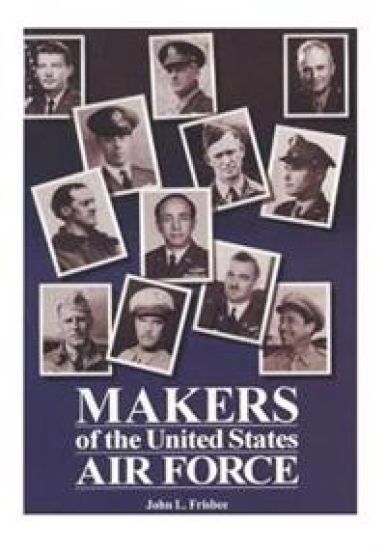
Makers of the United States Air Force

Makers of the United States Air Force

U. S. Air Force; Office of Air Force History

Createspace Independent Publishing Platform
2015
nidottu
The fiftieth anniversary of the United States Air Force offers us an opportunity to recognize and appreciate the role that a number of giftedmilitary and aviation pioneers played in shaping the world's only global air and space force. This book, a joint product of the Air Force History and Museums Program and the Air Force Historical Foundation, was first published in 1987. It has proven an indispensable reference work for anyone interested in the history of the service and, particularly, in the role that key individualshave played in its evolution. Many of the individuals profiled in this book are well-known to students of air and space power. Most had notablecombat careers. Others were organizers, men who shaped the service according to far-seeing vision. They are a diverse bunch of over-achievers, many of whom were strongly opinionated, even about each other. But all of them were dedicated to an ideal: to produce a new form of military force, a force that would achieve victory in war by exploitation and dominance of the third dimension. In this, they were totally and uncompromisingly unified, a band of brothers who took this vision from the ground and brought it, with devastating force, to the skies of America's enemies. On this, the Air Force's Golden Anniversary, all Americans owe them our grateful appreciation.
A Fit, Fighting Force: The Air Force Nursing Services Chronology

A Fit, Fighting Force: The Air Force Nursing Services Chronology

U. S. Air Force; Office of Air Force History

Createspace Independent Publishing Platform
2015
nidottu
Since the Air Force Nurse Corps emerged from the Army Nurse Corps in July 1949, Air Force nursing service personnel have excelled in providing dedicated care to their customers. At first these customers were our own Air Force members, families, and retirees. Today we often provide nursing care to other federal employees, Americans in the private sector, and patients in countries around the world. Nevertheless, over the last fifty-five years the mission of the Air Force Medical Service has basically remained the same, "to provide medical support necessary to maintain the highest degree of combat readiness and effectiveness of the USAF," or in today's words, "to maintain a fit, fighting force." Air Force nurses have contributed to this mission in both wartime and peacetime, providing leadership, caring, and quality care. Air Force nurses think of their customer- focused mission as a combination of "Global Nursing" and "Precision Care." As we enter the new millennium, this chronology reminds us of our past and recognizes the tremendous milestones and accomplishments of those who came before us-role models who provided the mentorship and guidance thathelped shape today's Air Force nurses. We are also inspired by our vision for the future-the Total Nursing Force, a seamless interaction of Regular Air Force, Air Force Reserve, Air National Guard, and civilian nurses to provide the best in nursing care. In the future our Total Nursing Force will face many challenges and great opportunities. I am certain we will add exciting new chapters to our story and continue our legacy of devoted service to our nation.
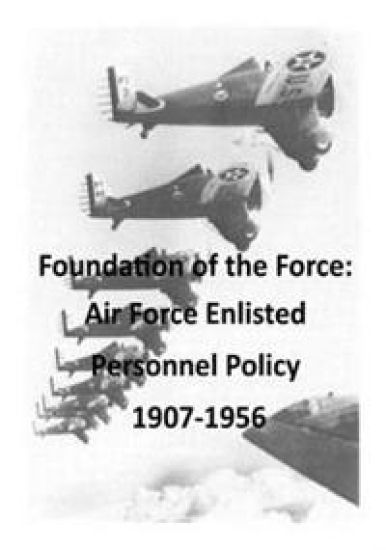
Foundation of the Force: Air Force Enlisted Personnel Policy 1907-1956

Foundation of the Force: Air Force Enlisted Personnel Policy 1907-1956

U. S. Air Force; Office of Air Force History

Createspace Independent Publishing Platform
2015
nidottu
THE UNITED STATES AIR FORCE is a diverse military organization, composed of officers, enlisted members, and civilians. One characteristicdefining it is that of professionalism in all three of its personnel components. Though professionalism has been recognized as an important part of military culture and organization over the centuries, it has become critically important in the twentieth century, the century of flight. For the Air Force, the weapons systems that the service employs are maintained, supported, and operated by members of the enlisted force. Inheritors of a proud tradition of service dating to the earliest days of American military aviation, enlisted members have fought-and too often died-in hostile skies around the world, in every conflictin which American aviators have participated. Organizing and training Air Force enlisted personnel have been among the greatest challenges to the service's leadership, as well as among its greatest accomplishments. Young men and women from varied social, cultural, andeducational backgrounds enter the service; are introduced to its culture, heritage, and traditions; are trained to fulfill myriad tasks; and then alreadyimbued with a sense of service before self, go forth to their first assignments. Ongoing career training and professionalization continue throughout their careers. That the Air Force has met the challenge of training its enlisted forcewell is evidenced by its members' record of accomplishments in America's wars and other times of national emergencies. This work traces how the service built its enlisted cadre in the key, early years of the service when the Air Force was itself a new and unsettledorganization. The lessons offered in this book present valuable perspective to decision-makers today as they grapple with force drawdown and maintaining appropriate standards of training and professionalism even as America's Air Force is called upon to serve in new and increasingly more demanding roles.
Airpower in Three Wars

Airpower in Three Wars

U. S. Air Force; Office of Air Force History

Createspace Independent Publishing Platform
2015
nidottu
I began working on this book some months ago when a number of colleagues asked me to record my thoughts about the employment of airpower, especially tactical airpower, after 35 years in the profession. I hadn't any illusions of being blessed with special wisdom, but, as they said, no one else shared exactly my perspective on tactical airpower, and other professional airmen might find it useful to know how I saw things, particularly during the Vietnam years, whether they happened to approve of my perceptions or not. Very soon I realized that my perspective was in fact several perspectives, and none of them could be maintained in perfect isolation from the others. I had watched strategy, tactics, and technology evolve, and all three of these evolutions fascinated me in recollection. I had seen tactical airpower from the viewpoints of the greenest fighter pilot (in 1939), the senior air commander in our longest war, and almost every position in between: dozens of perspectives there, and all of them seemed valid and important to me. So my problem became one of choosing from among my many perspectives the few that seemed likely to offer the most to other airmen. Although I take most delight in recalling my experiences as a young fighter pilot, I had to admit that there's probably nothing unique about that perspective. Hundreds of others shared about the same experiences and could describe them as well or better than I. Thus I turned away (fellow fighter pilots will understand how difficult this was) from the temptation to spin stories about those days.