Kirjojen hintavertailu – 12 859 819 kirjaa ja 27 kauppaa
Kirjailija
Rene Descartes
Kirjat ja teokset yhdessä paikassa: 410 kirjaa, julkaisuja vuosilta 1960–2026, suosituimpiin kuuluu Geometria A Renato Des Cartes. Vertaile teosten hintoja ja tarkista saatavuus suomalaisista kirjakaupoista.
Nimi esiintyy myös muodoissa: René Descartes, René Descartes
Para los historiadores del pensamiento m s sutiles, Descartes no es solo el fundador de la filosof a moderna, seg n afirma Hegel, sino tambi n el profeta de la ciencia del porvenir. El Discurso, texto eminentemente filos fico, marca el punto de ruptura con el mundo conceptual del medievo, dominado por la escol stica. Al mismo tiempo, y junto a su valor fundamental, es tambi n una cr nica del pensamiento, un libro de memorias, una elaboraci n cient fica en la que el investigador pasa a primer plano, a la primera persona. As reconocemos, a la par que la obra que funda los cimientos del mundo moderno, un minucioso retrato de su creador: Ren Descartes.
Ren Descartes was a French philosopher, mathematician, and scientist. Dubbed the father of modern western philosophy, much of subsequent Western philosophy is a response to his writings, which are studied closely to this day. He spent about 20 years of his life in the Dutch Republic.
Para los historiadores del pensamiento m s sutiles, Descartes no es solo el fundador de la filosof a moderna, seg n afirma Hegel, sino tambi n el profeta de la ciencia del porvenir. El Discurso, texto eminentemente filos fico, marca el punto de ruptura con el mundo conceptual del medievo, dominado por la escol stica. Al mismo tiempo, y junto a su valor fundamental, es tambi n una cr nica del pensamiento, un libro de memorias, una elaboraci n cient fica en la que el investigador pasa a primer plano, a la primera persona. As reconocemos, a la par que la obra que funda los cimientos del mundo moderno, un minucioso retrato de su creador: Ren Descartes.
Ren Descartes war ein franz sischer Philosoph, Mathematiker und Naturwissenschaftler. Descartes gilt als der Begr nder des modernen fr hneuzeitlichen Rationalismus, den Baruch de Spinoza, Nicolas Malebranche und Gottfried Wilhelm Leibniz kritisch-konstruktiv weitergef hrt haben. Sein rationalistisches Denken wird auch Cartesianismus genannt. Von ihm stammt das ber hmte Dictum "cogito ergo sum" ("Ich denke, also bin ich."), welches die Grundlage seiner Metaphysik bildet, aber auch das Selbstbewusstsein als genuin philosophisches Thema eingef hrt hat. Seine Auffassung bez glich der Existenz zweier miteinander wechselwirkender, voneinander verschiedener "Substanzen" - Geist und Materie - ist heute als cartesianischer Dualismus bekannt und steht im Gegensatz zu den verschiedenen Varianten des Monismus sowie zur dualistischen Naturphilosophie Isaac Newtons, der die Wechselwirkung aktiver immaterieller "Kr fte der Natur" mit der absolut passiven Materie lehrt (siehe dazu newtonsche Gesetze, Erstes Gesetz der Bewegung).
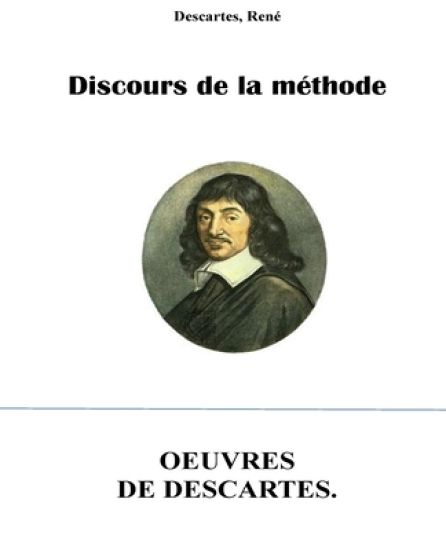
Le Discours de la m thode (sous-titr Pour bien conduire sa raison, et chercher la v rit dans les sciences) est le premier texte philosophique publi par Ren Descartes La Haye le 8 juin 1637. Dans les premi res ditions, ce discours servait d'introduction trois trait s scientifiques mettant en application cette m thode: La Dioptrique, Les M t ores et La G om trie.
Dans les premi res ditions, ce discours servait d'introduction trois trait s scientifiques mettant en application cette m thode: La Dioptrique, Les M t ores et La G om trie. Pour Descartes, il s'agit d'en dire assez pour faire juger que les nouvelles opinions, qui se verraient dans la Dioptrique et dans les M t ores, n' taient point con ues la l g re . Toutefois, sa c l brit est devenue telle, qu'il est d sormais souvent publi seul, comme un essai ind pendant. Ce discours marque une rupture avec la tradition scolastique, jug e trop sp culative par Descartes, et se pr sente plut t comme un plaidoyer pour une nouvelle fondation des sciences, sur des bases plus solides, et en faveur du progr s des techniques. Il a t r dig directement en fran ais, langue vulgaire, Descartes voulant par l s'opposer la tradition scolastique (qui avait pour habitude d' crire en latin) et s'adresser un public plus large que les savants et les th ologiens. Il souhaitait tre compris des femmes et des enfants . Dans ce discours, Descartes expose son parcours intellectuel de fa on r trospective, depuis son regard critique port sur les enseignements qu'il avait re us l' cole, jusqu' sa fondation d'une philosophie nouvelle quelques ann es plus tard. Il y propose aussi une m thode (compos e de quatre r gles) pour viter l'erreur, et y d veloppe une philosophie du doute, visant reconstruire le savoir sur des fondements certains, en s'inspirant de la certitude exemplaire des math matiques - la c l bre phrase je pense donc je suis (cogito, ergo sum), qui permet Descartes de sortir du doute, lui servira ce titre de premier principe. Par ailleurs, il y r sume ses m ditations sur l' me et sur Dieu, dont il donnera une version beaucoup plus tendue dans les M ditations m taphysiques, quatre ans plus tard. Le Discours de la m thode est aussi l'occasion pour Descartes de pr senter une morale provisoire, tenant en quelques maximes de conduite rendues n cessaires par la m thode elle-m me, et de d velopper des consid rations sur les animaux (th orie des animaux-machines ) et sur le r le du coeur dans la circulation du sang. Enfin, le trait pr sente des d clarations sur le rapport de l'homme la nature, repr sentatives de la modernit , puisque Descartes y dit que les hommes doivent se rendre comme ma tres et possesseurs de la nature, par le progr s des techniques, au premier plan desquelles il recommande d'am liorer la m decine.
Ren Descartes is often credited with being the "Father of Modern Philosophy." This title is justified due both to his break with the traditional Scholastic-Aristotelian philosophy prevalent at his time and to his development and promotion of the new, mechanistic sciences. His fundamental break with Scholastic philosophy was twofold. First, Descartes thought that the Scholastics' method was prone to doubt given their reliance on sensation as the source for all knowledge. Second, he wanted to replace their final causal model of scientific explanation with the more modern, mechanistic model. Descartes attempted to address the former issue via his method of doubt. His basic strategy was to consider false any belief that falls prey to even the slightest doubt. This "hyperbolic doubt" then serves to clear the way for what Descartes considers to be an unprejudiced search for the truth. This clearing of his previously held beliefs then puts him at an epistemological ground-zero. From here Descartes sets out to find something that lies beyond all doubt. He eventually discovers that "I exist" is impossible to doubt and is, therefore, absolutely certain. It is from this point that Descartes proceeds to demonstrate God's existence and that God cannot be a deceiver. This, in turn, serves to fix the certainty of everything that is clearly and distinctly understood and provides the epistemological foundation Descartes set out to find. Once this conclusion is reached, Descartes can proceed to rebuild his system of previously dubious beliefs on this absolutely certain foundation. These beliefs, which are re-established with absolute certainty, include the existence of a world of bodies external to the mind, the dualistic distinction of the immaterial mind from the body, and his mechanistic model of physics based on the clear and distinct ideas of geometry. This points toward his second, major break with the Scholastic Aristotelian tradition in that Descartes intended to replace their system based on final causal explanations with his system based on mechanistic principles. Descartes also applied this mechanistic framework to the operation of plant, animal and human bodies, sensation and the passions. All of this eventually culminating in a moral system based on the notion of "generosity." The presentation below provides an overview of Descartes' philosophical thought as it relates to these various metaphysical, epistemological, religious, moral and scientific issues, covering the wide range of his published works and correspondence.
bersicht der sechs folgenden Betrachtungen. Fu note] In der ersten Betrachtung werden die Gr nde auseinandergesetzt, weshalb wir an allen, besonders aber an den materiellen Dingen zweifeln k nnen; nat rlich nur solange unser Wissen nicht festere Grundlagen hat als bisher Allerdings d rfte wohl der Wert eines so umfassenden Zweifels nicht auf den ersten Blick klar sein. Er ist aber gleichwohl sehr gro , insofern er uns n mlich von allen Vorurteilen befreit und uns am leichtesten in den Stand setzt, den Verstand von den Sinnen abzulenken. Zugleich bewirkt er auch, da wir an dem, was wir schlie lich als wahr erkennen, nie wieder zweifeln k nnen. In der zweiten Betrachtung macht der Geist von der ihm eigenen Freiheit Gebrauch und nimmt an, alles das existiere berhaupt nicht, ber dessen Dasein auch nur der geringste Zweifel sich erheben k nnte. Dabei bemerkt er nun, da es v llig unm glich sei, da er selbst unterdessen nicht da sei. Das ist aber von gr tem Werte f r uns. Der Geist vermag auf Grund dessen leicht zu unterscheiden, was zu ihm, d. h. zum erkennenden Wesen, und was zum K rper geh rt. Vielleicht erwartet aber der eine oder der andere an jener Stelle Gr nde f r die Unsterblichkeit der Seele; darum glaube ich dieselben darauf aufmerksam machen zu sollen, da es mein Bestreben war, nichts zu schreiben, ohne es aufs genaueste zu beweisen. Darum konnte ich keine andere Methode befolgen, als die in der Geometrie gebr uchliche, n mlich alles vorauszuschicken, von dem der fragliche Satz abh ngt, bevor ich aus demselben irgend etwas folgerte. Das erste und wichtigste Erfordernis, um die Unsterblichkeit der Seele zu erkennen ist aber, da wir uns einen m glichst klaren Begriff von ihr bilden, der von jeglichem Begriffe von etwas K rperlichem vollkommen zu unterscheiden ist. Dies ist dort geschehen. Weiter ist erforderlich, zu wissen, da alles das, was wir klar und deutlich einsehen, wahr sei. Das kann aber vor der vierten Betrachtung nicht bewiesen werden. Ferner m ssen wir einen deutlichen Begriff vom Wesen des K rpers haben. Dieser wird teils noch in der zweiten, teils erst in der f nften und sechsten Betrachtung gebildet. Daraus ist dann zu schlie en, da alles das, was wir klar und deutlich als verschiedene Substanzen begreifen, sowie wir Geist und K rper begreifen, auch in der That Substanzen seien, die voneinander verschieden sind. Dieser Schlu wird in der sechsten Betrachtung gezogen und wird daselbst noch dadurch best tigt, da wir alle K rper als teilbar, den Geist dagegen oder die menschliche Seele nur als unteilbar auffassen. In der That k nnen wir ja von keinem Geiste eine Mitte vorstellen, wie wir es bei jedem noch so kleinen K rper k nnen. Wir erkennen also das Wesen von K rper und Geist nicht nur als verschieden, sondern sogar in gewissem Sinne als entgegengesetzt.
Principles of Philosophy (Latin: Principia philosophiae) is a book by Ren Descartes. In essence it is a synthesis of the Discourse on Method and Meditations on First Philosophy It was written in Latin, published in 1644 and dedicated to Elisabeth of Bohemia, with whom Descartes had a long-standing friendship. A French version (Les Principes de la Philosophie) followed in 1647. It set forth the principles of nature-the Laws of Physics-as Descartes viewed them. Most notably, it set forth the principle that in the absence of external forces, an object's motion will be uniform and in a straight line. Newton borrowed this principle from Descartes and included it in his own Principia; to this day, it is still generally referred to as Newton's First Law of Motion. The book was primarily intended to replace the Aristotelian curriculum then used in French and British Universities. The work provides a systematic statement of his metaphysics and natural philosophy, and represents the first truly comprehensive, mechanistic account of the universe.
El Discurso del m todo, cuyo t tulo completo es Discurso del m todo para conducir bien la propia raz n y buscar la verdad en las ciencias (Discours de la m thode pour bien conduire sa raison, et chercher la v rit dans les sciences) es la principal obra escrita por Ren Descartes y una obra fundamental de la filosof a occidental con implicaciones para el desarrollo de la filosof a y de la ciencia. Se public de forma an nima en Leiden (Holanda) en el a o 1637. Constitu a, en realidad, el pr logo a tres ensayos: Di ptrica, Meteoros y Geometr a; agrupados bajo el t tulo conjunto de Ensayos filos ficos. Descartes titul esta obra Discurso del m todo con una finalidad precisa. En una carta que dirige a Marin Mersenne le explica que la ha titulado Discurso y no Tratado para poner de manifiesto que no ten a intenci n de ense ar, sino s lo de hablar. Con esto Descartes trata de alejarse de cualquier problema que pudiese surgir con sus contempor neos por las ideas vertidas en esta obra y adem s escapa as de una posible condena eclesi stica como hab a ocurrido poco tiempo antes con Galileo y cuyas ideas Descartes no consideraba desacertadas.
The Discourse on the Method (French: Discours de la m thode) is a philosophical and autobiographical treatise published by Ren Descartes in 1637. Its full name is Discourse on the Method of Rightly Conducting One's Reason and of Seeking Truth in the Sciences (French title: Discours de la m thode pour bien conduire sa raison, et chercher la v rit dans les sciences). The Discourse on The Method is best known as the source of the famous quotation "Je pense, donc je suis" ("I think, therefore I am"), which occurs in Part IV of the work. (The similar statement in Latin, Cogito ergo sum, is found in Part I, 7 of Principles of Philosophy.) The Discourse on the Method is one of the most influential works in the history of modern philosophy, and important to the development of natural sciences. In this work, Descartes tackles the problem of skepticism, which had previously been studied by Sextus Empiricus, Al-Ghazali and Michel de Montaigne. Descartes modified it to account for a truth he found to be incontrovertible. Descartes started his line of reasoning by doubting everything, so as to assess the world from a fresh perspective, clear of any preconceived notions. The book was originally published in Leiden in the Netherlands. Later, it was translated into Latin and published in 1656 in Amsterdam. The book was intended as an introduction to three works Dioptrique, M t ores and G om trie. La G om trie contains Descartes' first introduction of the Cartesian coordinate system. That the text was written and published in French rather than Latin, which was the language in which philosophical and scientific texts were most frequently written and published (as were most of Descartes' other works), is worth noting. Together with Meditations on First Philosophy (Meditationes de Prima Philosophia), Principles of Philosophy (Principia philosophiae) and Rules for the Direction of the Mind (Regulae ad directionem ingenii), it forms the base of the epistemology known as Cartesianism.
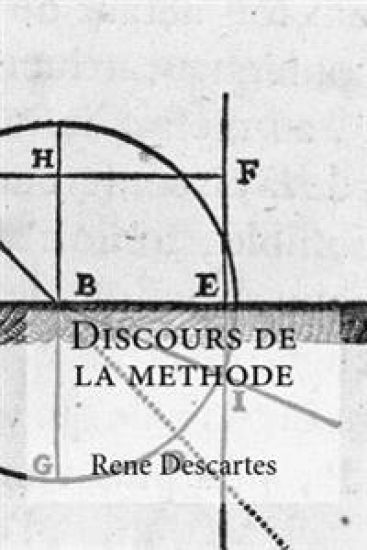
Le Discours de la m thode (sous-titr Pour bien conduire sa raison, et chercher la v rit dans les sciences) est le premier texte philosophique publi par Ren Descartes La Haye le 8 juin 1637. Dans les premi res ditions, ce discours servait d'introduction trois trait s scientifiques mettant en application cette m thode: La Dioptrique, Les M t ores et La G om trie. Pour Descartes, il s'agit d'en dire assez pour faire juger que les nouvelles opinions, qui se verraient dans la Dioptrique et dans les M t ores, n' taient point con ues la l g re 1. Toutefois, sa c l brit est devenue telle, qu'il est d sormais souvent publi seul, comme un essai ind pendant. Ce discours marque une rupture avec la tradition scolastique, jug e trop sp culative par Descartes, et se pr sente plut t comme un plaidoyer pour une nouvelle fondation des sciences, sur des bases plus solides, et en faveur du progr s des techniques. Il a t r dig directement en fran ais, langue vulgaire, Descartes voulant par l s'opposer la tradition scolastique (qui avait pour habitude d' crire en latin) et s'adresser un public plus large que les savants et les th ologiens. Il souhaitait tre compris des femmes et des enfants2 . Dans ce discours, Descartes expose son parcours intellectuel de fa on r trospective, depuis son regard critique port sur les enseignements qu'il avait re us l' cole, jusqu' sa fondation d'une philosophie nouvelle quelques ann es plus tard. Il y propose aussi une m thode (compos e de quatre r gles) pour viter l'erreur, et y d veloppe une philosophie du doute, visant reconstruire le savoir sur des fondements certains, en s'inspirant de la certitude exemplaire des math matiques - la c l bre phrase je pense donc je suis (cogito, ergo sum), qui permet Descartes de sortir du doute, lui servira ce titre de premier principe. Par ailleurs, il y r sume ses m ditations sur l' me et sur Dieu, dont il donnera une version beaucoup plus tendue dans les M ditations m taphysiques, quatre ans plus tard. Le Discours de la m thode est aussi l'occasion pour Descartes de pr senter une morale provisoire, tenant en quelques maximes de conduite rendues n cessaires par la m thode elle-m me3, et de d velopper des consid rations sur les animaux (th orie des animaux-machines ) et sur le r le du coeur dans la circulation du sang. Enfin, le trait pr sente des d clarations sur le rapport de l'homme la nature, repr sentatives de la modernit , puisque Descartes y dit que les hommes doivent se rendre comme ma tres et possesseurs de la nature, par le progr s des techniques, au premier plan desquelles il recommande d'am liorer la m decine.
Meditations on First Philosophy (subtitled In which the existence of God and the immortality of the soul are demonstrated) is a philosophical treatise by Ren Descartes first published in 1641 (in Latin). The French translation (by the Duke of Luynes with Descartes' supervision) was published in 1647 as M ditations Metaphysiques. The original Latin title is Meditationes de prima philosophia, in qua Dei existentia et anim immortalitas demonstratur. The title may contain a misreading by the printer, mistaking animae immortalitas for animae immaterialitas, as suspected already by A. Baillet. The book is made up of six meditations, in which Descartes first discards all belief in things that are not absolutely certain, and then tries to establish what can be known for sure. He wrote the meditations as if he had meditated for six days: each meditation refers to the last one as "yesterday" (In fact, Descartes began work on the Meditations in 1639) One of the most influential philosophical texts ever written, it is widely read to this day. The Meditations consist of the presentation of Descartes' metaphysical system in its most detailed level and in the expanding of Descartes' philosophical system, which he first introduced in the fourth part of his Discourse on Method (1637). Descartes' metaphysical thought is also found in the Principles of Philosophy (1644), which the author intended to be a philosophy guidebook.